This is an opinion column. The facts are linked; the argument is ours.
Congress passed a Russia sanctions law with a lock on it. The only way to end the sanctions, the law says, is for the president to certify that Russia signed a peace agreement Ukraine accepts and stopped trying to overthrow its government. That is a real standard. It ties American pressure to an actual end of the war.
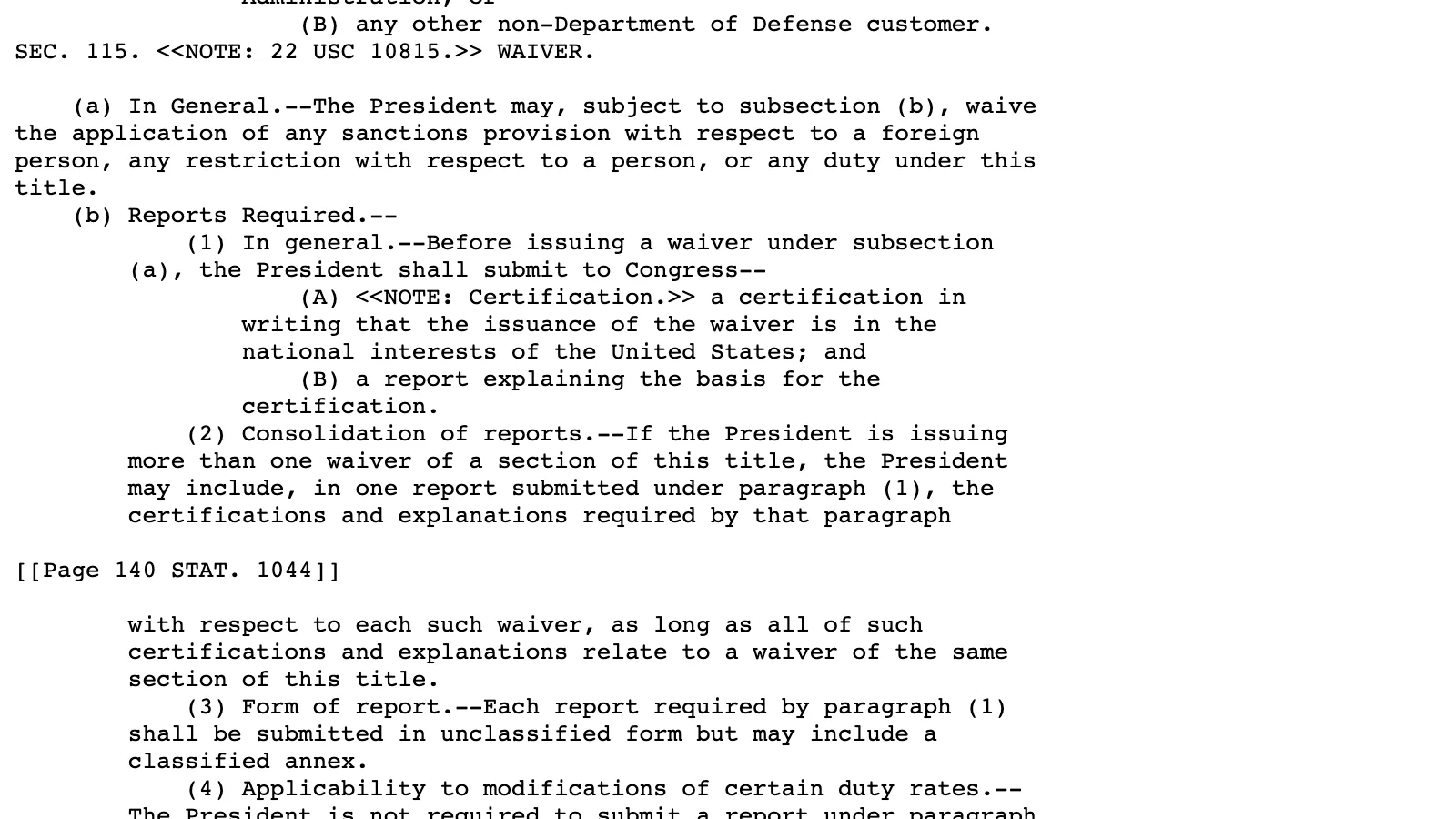
Then Congress built a side door. Section 115 lets the president waive any of it by certifying the waiver is “in the national interests of the United States” and sending a report. No peace deal required. No vote. No clock.
On Oct. 16 the White House walked through that door. The order announced a 500% duty on Russian goods and then, a few paragraphs later, waived it. It waived most of the sanctions sections. And it waived the termination section itself, the lock, so the peace-deal standard Congress wrote now governs nothing.
Here is the part that should bother everyone, whatever you think of the war. The law requires the report explaining the waiver to be unclassified. The public has not seen it. The order gives no reason beyond the phrase “national interests.” A sanctions law that took months to pass was neutralized in a single document, and the explanation is sitting somewhere in a congressional inbox.
This is not a partisan complaint. It is a design flaw. When Congress writes a tough rule and a one-signature escape hatch into the same bill, the escape hatch is the law. Members get to vote for toughness at home and leave the real decision to someone else.
The fix is simple. Publish the Section 115 report now. Next time, give Congress a vote before a waiver takes effect, the way the law already does for ending sanctions. If the national interest is strong enough to waive a law, it is strong enough to say out loud.
Caretakers of democracy do not accept “trust us” as a reason. Neither should Congress.