Congress wrote two doors into its new Russia sanctions law. One is hard to open. The other takes one signature. On Oct. 16, the White House went through the easy one.
The hard door. Section 117 of the Graham Act lets the president terminate the sanctions only by certifying to Congress that Russia has signed a peace agreement accepted by Ukraine’s government and has stopped its military hostilities and efforts to overthrow that government.
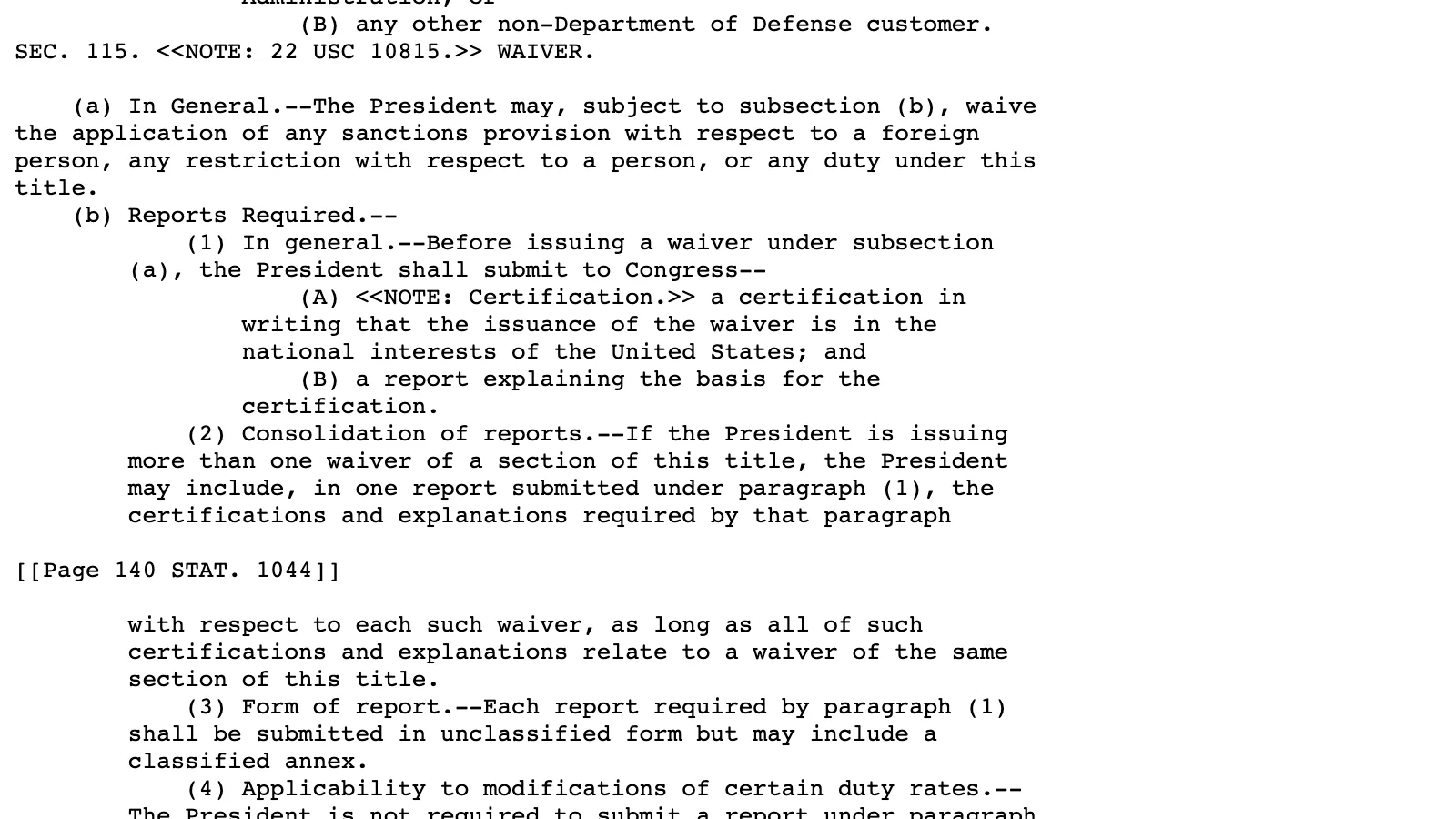
The easy door. Section 115 lets the president waive any sanction, restriction or duty in the law. The requirement: before issuing a waiver, send Congress a written certification that it is “in the national interests of the United States” and a report explaining the basis. The report must be unclassified, though it can carry a classified annex.
What the order did. The Oct. 16 executive order raises the duty on Russian goods by 500% and sets 100% duties on the biggest buyers of Russian oil and gas and on the top sanctions-evasion facilitators. Then, in Section 4 of the same order, it waives those duties. It waives sanctions under sections 102(a), 102(d), 102(e) and 103 through 111. And it waives Section 117, the termination section itself. Each waiver says the president has sent Congress the certification and report. The waivers stay in effect until the president or the secretary of state decides “further action is appropriate.” Sanctions under earlier Russia executive orders stay in place, the order says.
Diesel, too. A week earlier, on Oct. 9, Treasury’s sanctions office issued General License 135, authorizing transactions involving Russian-origin diesel, including imports into the United States, through April 7, 2027.
What the public cannot see. The law says the report explaining the basis must be unclassified. BTP has not found it published. The order itself gives no reason beyond the national-interest certification.
Congress set the bar for ending these sanctions at peace in Ukraine. The waiver let the White House step over it without saying why in public. The report Congress received should be on the record.