The Supreme Court Just Came Back. Your Ballot Is on the Docket.
Proof-of-citizenship rules, last-minute voter purges, and unlimited party money: the new term decides who gets to vote and who gets to pay for it.
Get the next one in your inbox. Free, every weekday morning.
Burn the Establishment Playbook Est. 2025 · Free to the People |
Burn the Playbook
“The newsletter DC reads and hopes you don’t.”
★ Independent · Editor-Owned ★
| Morning Edition | Vol. I · Washington | Sat, Oct 10, 2026 |
The Standard Two of three sources. One a document.
The Firewall Economics, never coverage.
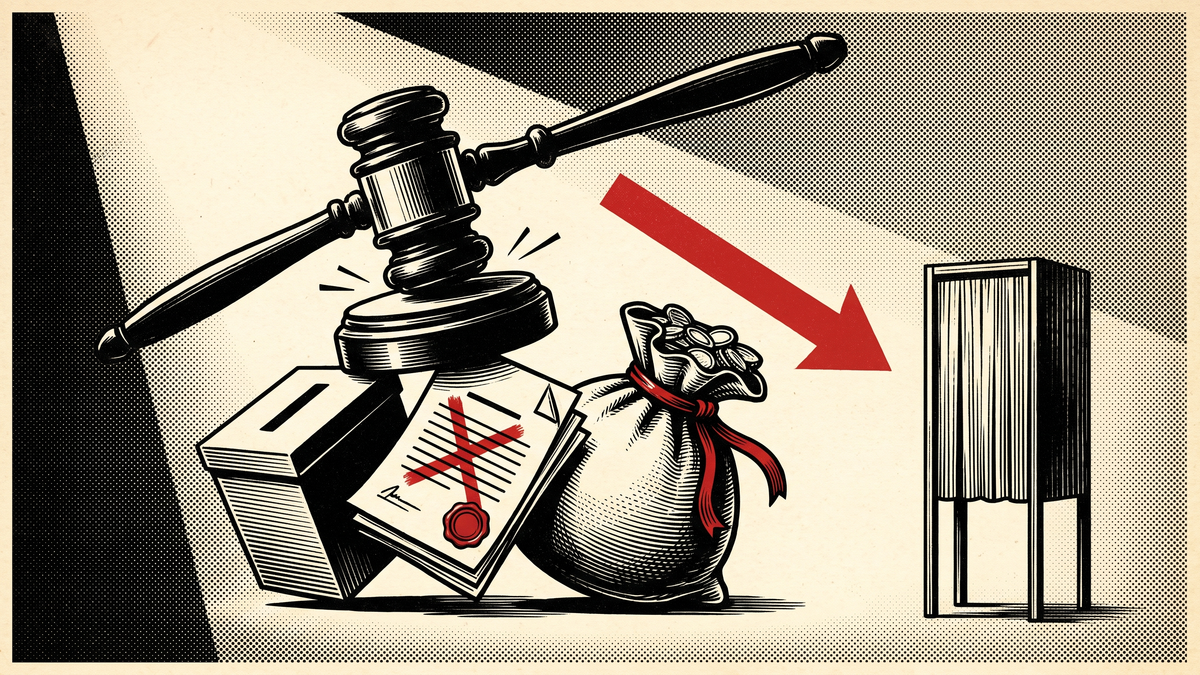
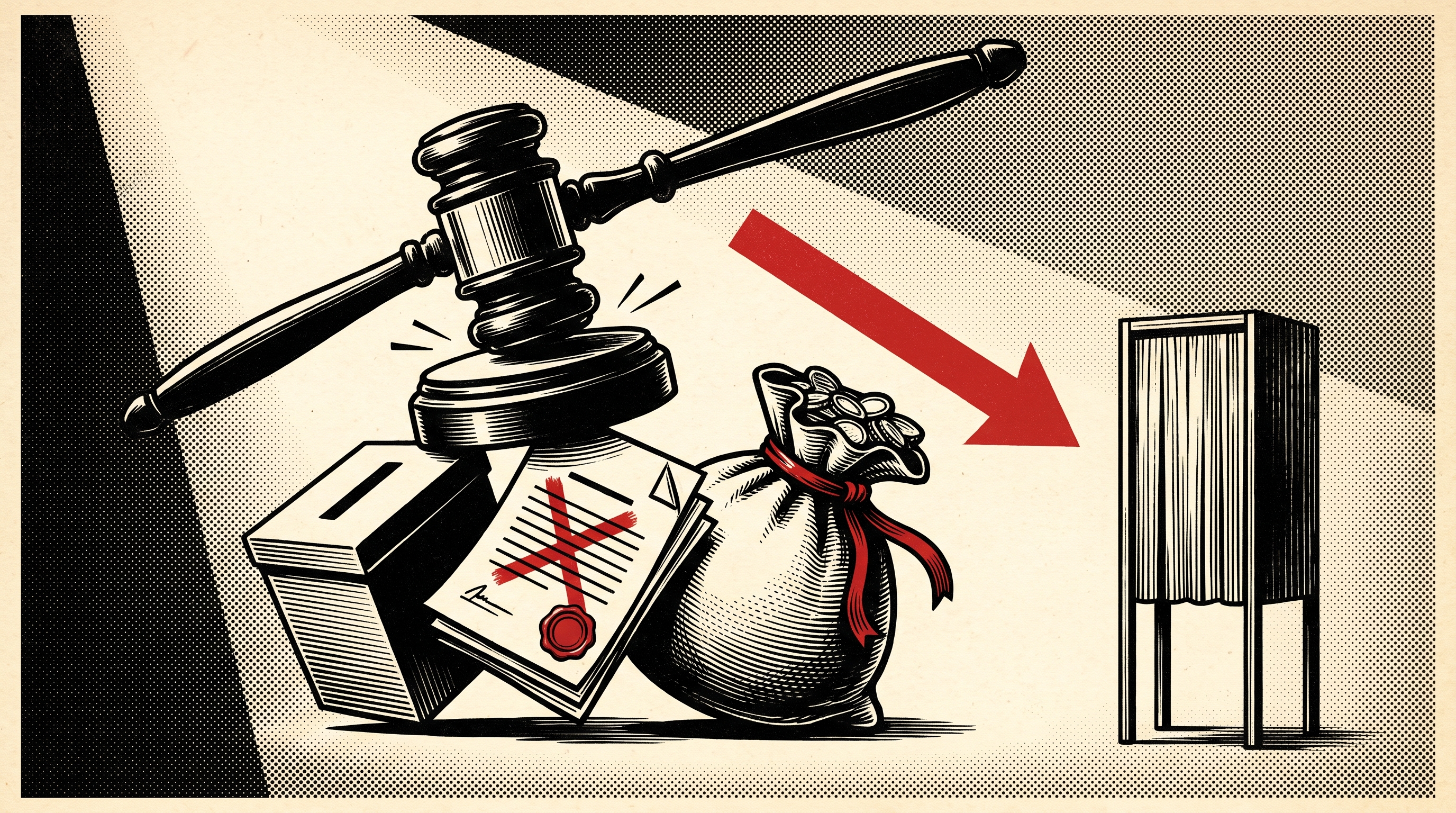 The Court · The New Term The issue in three numbers.
|
Inside The story · Polling Desk · Watch BTP · Doing Some Good · Jobs · Reading · Watching |
On Monday, Oct. 5, nine people in robes walked back into the marble building to hear the first arguments of a new term. The case over who gets to vote for president in Arizona was not on Monday's list. It is on the docket, set for Dec. 8, and it will shape the rules of the next election.
You will hear about guns, religion and climate suits this term. Fine. But the cases that decide who gets on the voter rolls, who gets knocked off them, and how much money can chase a candidate are the ones that decide everything else.
Twenty years inside campaigns taught me one thing about election law: the side that writes the rules usually does not need to win the argument. It just needs to win the paperwork.
The Court is not reviewing elections. It is rewriting the machinery.
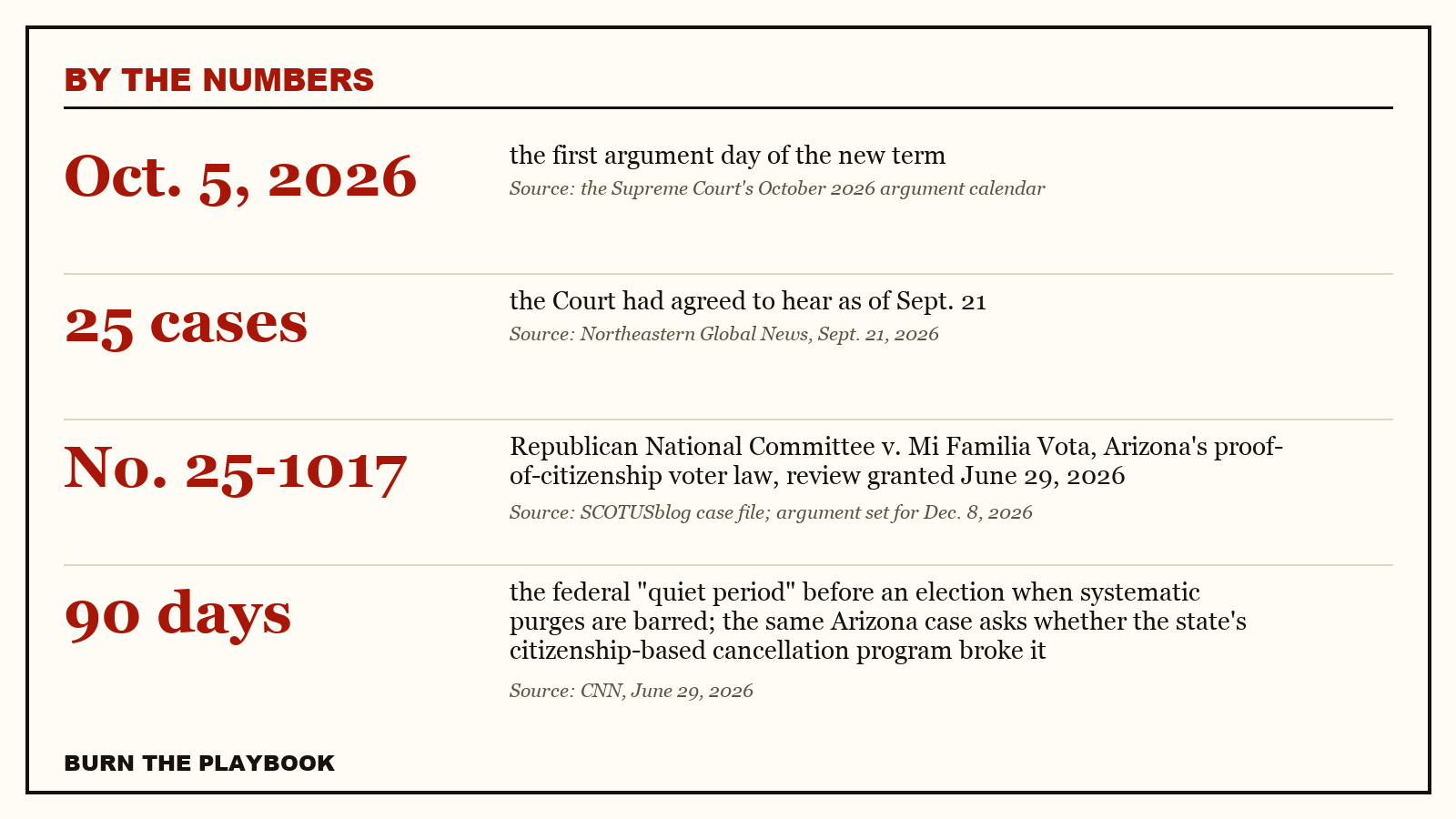
By the Numbers
Oct. 5, 2026: the first argument day of the new term, per the Supreme Court's October 2026 argument calendar |
25 cases: the Court had agreed to hear as of Sept. 21, per Northeastern Global News, Sept. 21, 2026 |
No. 25-1017: Republican National Committee v. Mi Familia Vota, Arizona's proof-of-citizenship voter law, review granted June 29, 2026, per SCOTUSblog case file; argument set for Dec. 8, 2026 |
90 days: the federal "quiet period" before an election when systematic purges are barred; the same Arizona case asks whether the state's citizenship-based cancellation program broke it, per CNN, June 29, 2026 |
6–3: the vote in NRSC v. FEC, June 30, 2026, striking down limits on party spending coordinated with candidates, per Skadden, July 2026 |
$65,300: the old cap on party spending coordinated with most House nominees, now gone, per Skadden, July 2026 |
Ad. BTP earns a commission if you sign up. If you have been meaning to talk to someone. BetterHelp says it matches you with a licensed therapist by chat, phone or video. See how it works → |
The case: prove you're a citizen, or sit out the presidency
Reported: the Ninth Circuit held that the National Voter Registration Act preempts Arizona's rule barring people who have not shown documentary proof of citizenship from voting for president. The RNC asked the Court to reverse that, and the Court said yes to hearing it.
BTP argues: this is not about noncitizens voting. It is about how many eligible citizens lose their vote because a birth certificate is in a shoebox in a mother's closet two states away. Paperwork rules never land evenly. They land on the young, the poor, the recently moved, and people who look like me.
The side that writes the rules usually does not need to win the argument. It just needs to win the paperwork. |
Same case, second question: the purge clock
Proven: federal law bars systematic removal of voters within 90 days of a federal election. Reported: a lower court found Arizona's citizenship-based cancellation program broke that rule, and the justices will review that question in the same case, per NPR.
The quiet period exists because a wrong purge in August cannot be fixed by November. If the Court loosens it, the fix-it window closes and the mistakes become the result.
Who benefits. Who pays.
Party committees won big in June. After NRSC v. FEC, national parties and state party federal accounts can spend without limit in coordination with their candidates, per Skadden. The biggest donors now have a straighter pipe to the candidate's own ad plan.
Who pays is the voter with the least slack: the one who has to find a document, the one purged in the final stretch, the one whose small-dollar check now competes with a party war chest that can move in lockstep with the campaign.
The deep cut
Executive power is the other front. Last term the Court told the president that emergency powers law does not cover tariffs, 6–3, in Learning Resources v. Trump, and it struck down the birthright citizenship order in Trump v. Barbara. Reported: previews say this term keeps testing how far the executive can move without Congress and how far it can reach into election administration, per The Well News.
BTP argues: the Court has shown it will say no to a president on money and citizenship. The open question is whether it says no to the states and parties quietly shrinking the electorate. That fight gets less airtime, and it moves more votes.
Forward this to one person who thinks the Supreme Court is somebody else's problem. |
Polling Desk What Americans think of the CourtPublished polls only, each with its method on the label, so you can judge the number yourself. Gallup · National poll 34% of U.S. adults approve of the job the Supreme Court is doing. 61% disapprove. Pollster and sponsor: Gallup, its annual Governance poll About one American in three approves of the Court as the term opens, essentially tied with Gallup's record low of 33% in July. Marquette Law School Poll · National poll 43% of adults approve of the way the Supreme Court is handling its job, down from 47% in July. 57% disapprove. Pollster and sponsor: Marquette Law School Poll A different method and a higher number than Gallup, but the same direction: fewer Americans approve of the Court than did in July. |
Watch · BTP From the BTP channel The Donor Wrote the Check, Then Sued Your Vote Burn the Playbook on YouTube · Watch it |
Spotlight Doing Some GoodOne person each issue making life better for the people around them.
Joe Palomino Volunteer, East Texas Food Bank · Texarkana, Texas Joe Palomino has volunteered at the East Texas Food Bank's Texarkana Resource Center since it opened in 2024. The food bank says he has put in more than 1,100 hours over 400 shifts. “He steps in wherever he is needed,” center manager Shan Parks said. On Sept. 3 the food bank gave him its Volunteer Hunger Hero Award. Sources: Texarkana Gazette, Sept. 3, 2026; East Texas Food Bank, Sept. 2026 |
Jobs Board Who’s hiringOpenings across four lanes, each link checked Oct. 3. Pay is what the employer posts. Jobs can close without notice, so check the listing before you apply. Public service Legislative Correspondent, Health, Education and Labor Office of Sen. Edward J. Markey · Washington, D.C. Pay: $64,226 a year Senate Employment Bulletin listing. Unions and nonprofits The Battery Network, a battery-recycling nonprofit · Remote within the U.S., with travel 3 to 5 times a year Pay: $68,000 to $75,000 a year Asks for 3 to 5 years in marketing, communications or outreach. Law Attorney Advisor (five openings) U.S. Department of Transportation, Pipeline and Hazardous Materials Safety Administration · Washington, D.C. Pay: $85,447 to $197,200 a year, GS-11 to GS-15 Federal posting on USAJOBS. Any field Empassion · Remote within the U.S. Pay: $45,000 to $50,000 a year Full time. Asks for 3+ years as an LPN. |
Reading Things Mike Is ReadingBook The Sum of Us: What Racism Costs Everyone and How We Can Prosper Together McGhee follows the price everyone pays when public goods are pulled away to keep some people out, and what communities gain when they build across the color line. Heather McGhee · One World, 2021 Mountain State Spotlight Millions of dollars are coming for rural health. But thousands are losing Medicaid to pay for it. Beck reports West Virginia gets almost $200 million this year for rural health projects. The Urban Institute and the Robert Wood Johnson Foundation estimate 40,000 to 75,000 West Virginians on Medicaid will lose coverage by 2028. Erin Beck · Sept. 29, 2026 |
Watching Things Mike Is Watching The Bulwark · Oct. 3 These Trump Voters Are Considering the Unthinkable: Voting for a Democrat (Amy Walter) | Focus Group A focus group of Trump voters who say they are thinking about voting for a Democrat, with Amy Walter. |
Ad. BTP may earn a commission if you subscribe. Five minutes, then back to your day. Five Minute Daily says it covers the whole day's news in five minutes. BTP goes deep on one story each issue, while Five Minute Daily is for the quick sweep of the rest. Try Five Minute Daily free → |
Sources
Supreme Court of the United States, October 2026 argument calendar, 2026.
Northeastern Global News, "Supreme Court Term 2026-2027: Key Cases to Watch", September 2026.
SCOTUSblog, RNC v. Mi Familia Vota (25-1017), June 2026.
Arizona Capitol Times, proof-of-citizenship review, July 2026.
CNN, Supreme Court to review late voter purges, June 2026.
NPR, voter roll purges and the 90-day rule, July 2026.
FEC Record, NRSC v. FEC, 2026.
Skadden, NRSC v. FEC analysis, July 2026.
Supreme Court of the United States, Learning Resources, Inc. v. Trump, No. 24-1287, slip opinion, Feb. 20, 2026.
SCOTUSblog, Trump v. Barbara (25-365), June 2026.
The Well News, Supreme Court Preview: The 2026–2027 Term, 2026.
Burn Notice: The loudest cases get the headlines. The paperwork cases pick the winners.
Michael
This one is built to forward.
Subscribe free to get the next briefing in your inbox.