Six Justices Just Handed Trump Your Voter File
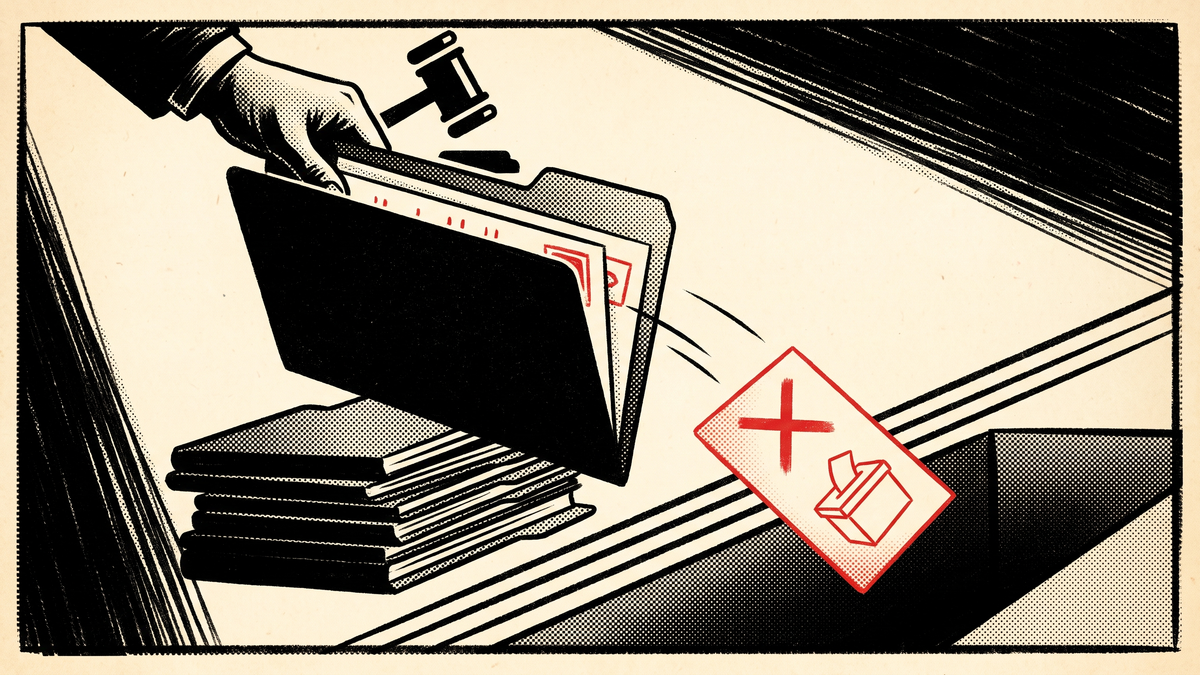
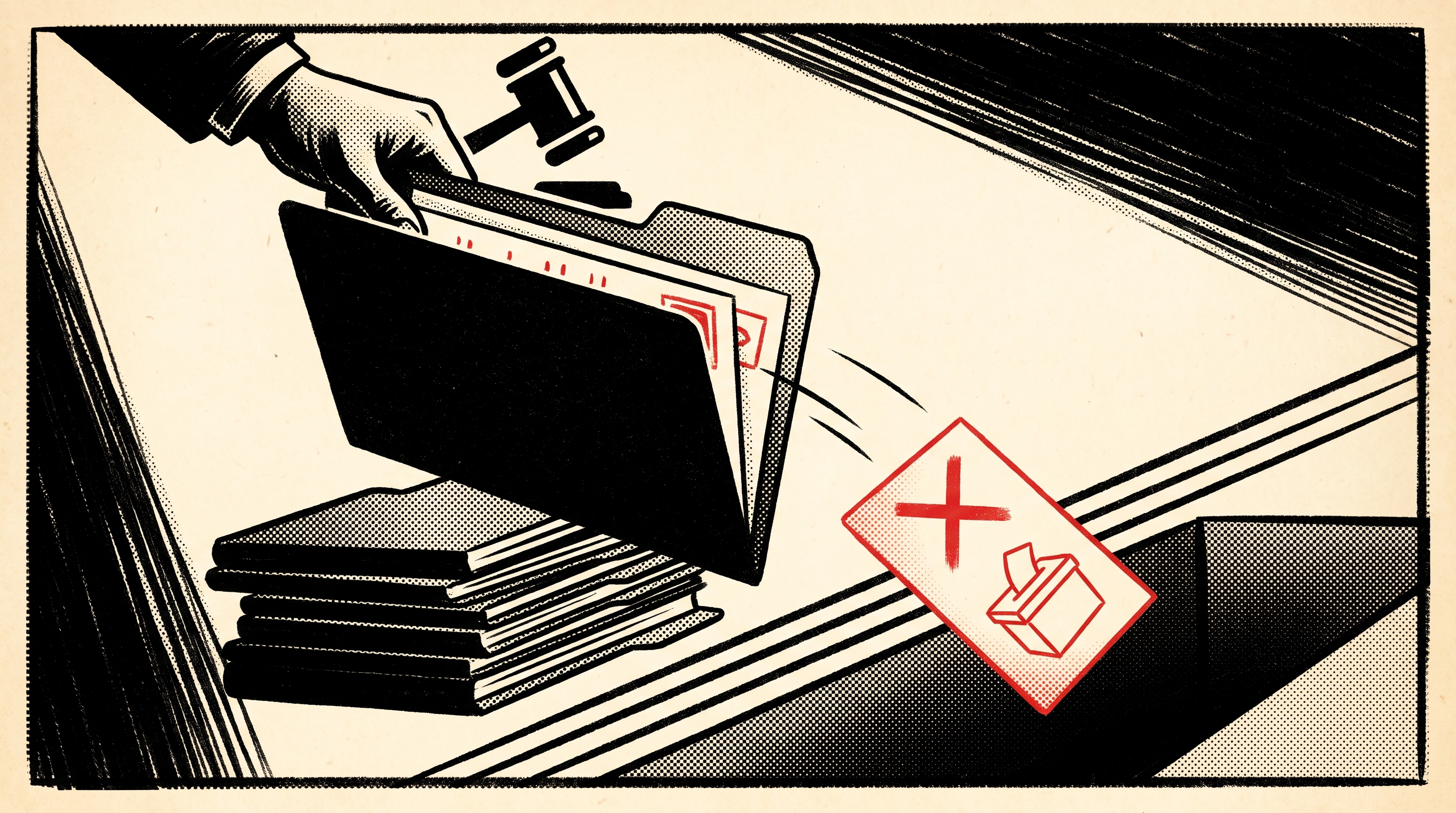
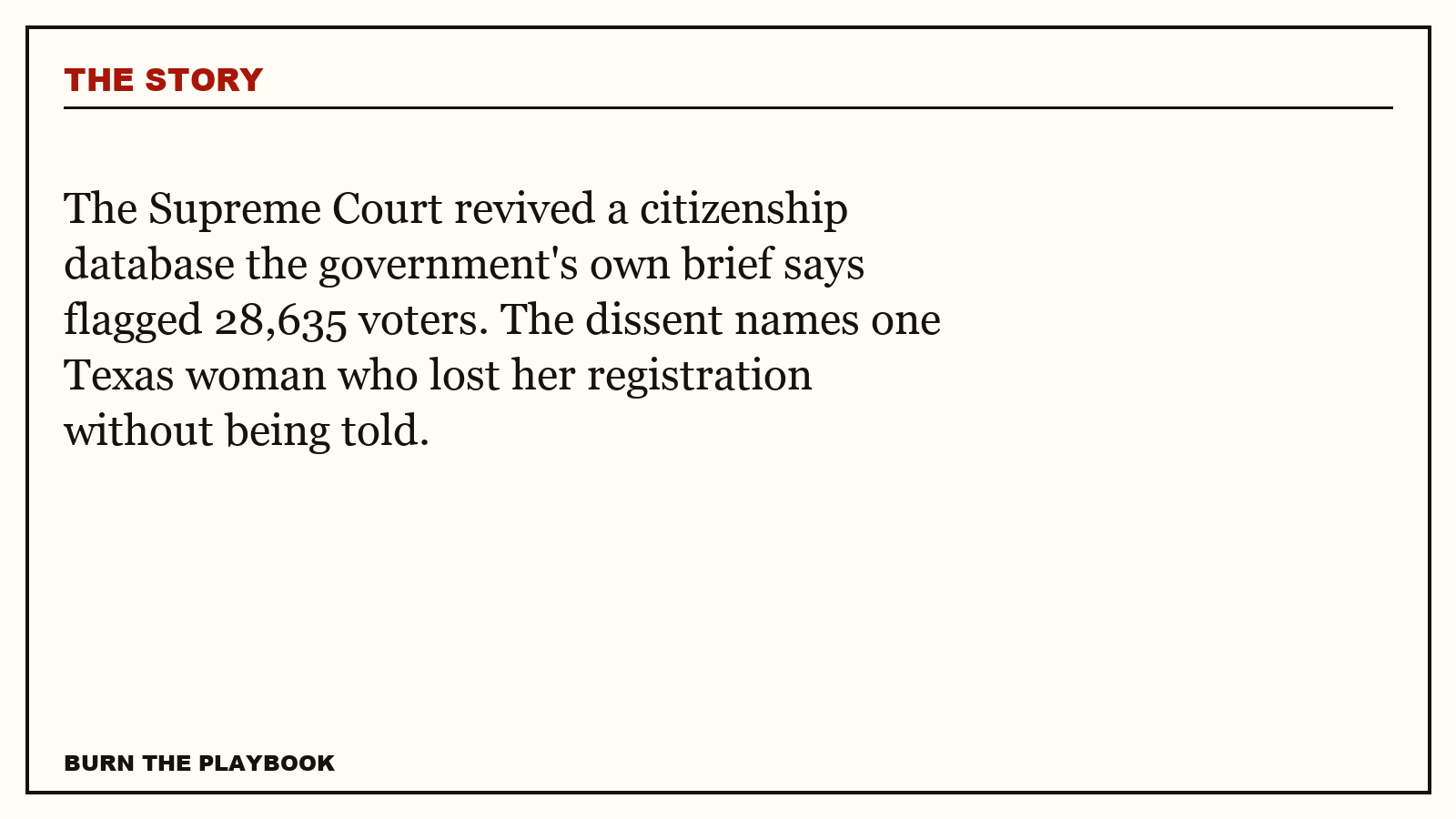
The Supreme Court revived a citizenship database the government's own brief says flagged 28,635 voters. The dissent names one Texas woman who lost her registration without being told.
Get the next one in your inbox. Free, every weekday morning.
Burn the Establishment Playbook Est. 2025 · Free to the People |
Burn the Playbook
“The newsletter DC reads and hopes you don’t.”
★ Independent · Editor-Owned ★
| Morning Edition | Vol. I · Washington | Thu, Oct 8, 2026 |
The Standard Two of three sources. One a document.
The Firewall Economics, never coverage.
 The Court · Your Voter File The issue in three numbers.
|
Inside The story · Watch BTP · Doing Some Good · Jobs · Reading · Watching |
On September 25, six justices joined an order nobody put a name on. Six pages. Unsigned.
And with it the federal government got back a machine a federal judge switched off on June 22. Page one of her opinion: the government "has knowingly trampled on the privacy rights of American citizens in a manner that threatens the sacred right to vote."
You will not feel it today. You will feel it before November 3, when a letter shows up telling you to prove you are a citizen before you can vote in elections you have voted in for thirty years. Or the letter never comes, and you find out at the check-in table on Election Day. That second version is the one the dissent wanted you to read.
I know what a voter roll is. It is not a list of suspects. For most people it is the only proof they ever get that the country counted them.
The government's number is 28,635. The dissent's is a woman in Texas nobody told.
6 to 3. The Supreme Court granted the Trump administration's emergency stay in DHS v. League of Women Voters, No. 26A308, reviving the modified SAVE citizenship-check system. Jackson dissented, joined by Sotomayor and Kagan. Per the Supreme Court order, Sept. 25, 2026. |
28,635 voters flagged as "potential" non-citizens across 26 states. Flagged, not confirmed. That is the government's own number, per the Solicitor General's stay application, Sept. 8, 2026. |
278,000 is the number Trump used in the East Room on July 16, 2026, for non-citizens supposedly registered to vote. Two months later his own lawyers counted SAVE flags, not confirmed non-citizens, and gave the Court 28,635 across 26 states, about 90 percent smaller. Per NPR, July 16, 2026, and the stay application above. |
59.7 million voter-verification requests ran through SAVE between Jan. 1, 2025 and April 1, 2026, per the same stay application. |
One Texas voter, a member of the plaintiff groups, "had her voter registration revoked without her knowledge," and two more had to produce citizenship papers to stay registered. Per Justice Jackson's dissent, page 11, Sept. 25, 2026. |
0 for 25. The Justice Department's record in trial courts on its lawsuits to seize state voter rolls, as of Sept. 22, 2026. It sued 30 states and D.C. Per Democracy Docket, Sept. 22, 2026, and OPB, Sept. 23, 2026. |
Ad. BTP may earn a commission if you sign up. If you have been meaning to talk to someone. BetterHelp says it matches you with a licensed therapist by chat, phone or video, with 20% off the first month for new users. See how it works → |
Start with what SAVE was. For years it was a slow, paid, one-name-at-a-time tool that agencies used to check immigration status for benefits. You typed in an alien registration number and waited. Citizens born here were mostly not in it, because the system was never built to know who they were.
In May 2025 the administration rebuilt it. States could now search by Social Security number, upload their whole voter file in bulk, and pull from Social Security's master record, the NUMIDENT. The fee went to zero.
Twenty-six states signed on. The Justice Department sued 30 states and Washington, D.C., to force them to hand over their voter rolls. As of September 22, it had lost all 25 of those cases a trial court had decided. SAVE needs no court order, and a state that says yes can upload every voter in it, including yours.
The problem is what Social Security's file says about you. Its citizenship field is a snapshot from whenever you got your first card. NPR reported on September 3 that the data "often isn't updated when people naturalize," and that SAVE "frequently doesn't include records for people who became citizens as minors when their parents naturalized." The voting-rights researchers at the Brennan Center put it plainer in April: the program "frequently mistakenly flags Americans as potential noncitizens, with a very high error rate."
So the machine does not find non-citizens. It finds people whose paperwork is old. Those are not the same group, and the second group is disproportionately naturalized: people who became Americans instead of being born that way, and whose paperwork never got the news.
The harm is to the government's preference. |
Judge Sparkle Sooknanan heard the case in Washington. On June 22 she vacated the modified system for violating the Social Security Act, the Privacy Act and the Administrative Procedure Act. SCOTUSblog, reporting September 25, quotes her finding that states "are actively removing United States citizens from voter rolls based on inaccurate information." The federal appeals court in Washington refused to pause her order on September 4, and four days later the Solicitor General went to the Supreme Court.
Six justices weighed the harm to the program. None of them weighed the harm to the woman.
The majority's argument runs through one statute, 8 U.S.C. 1373, a 1996 law that bars state and local governments from blocking their employees from sharing immigration information with the feds.
From that, the Court wrote, "Congress necessarily authorized DHS to request and receive that information." A shield against local obstruction became a sword through the Privacy Act.
Jackson called that reading "implausible": the provisions "do not affirmatively grant any power. Nor do they override any explicit statutory limits."
Then the Court weighed the equities. Its sentence on irreparable harm is worth reading twice: "The order below prevents the Federal Government from using the program it believes is best suited to the task." The harm is to the government's preference. The Texas woman whose registration vanished appears in the dissent and nowhere else.
That is the whole ruling in miniature. When the question is whether the state may be inconvenienced, the answer is no. When the question is whether a citizen may be erased by a database error in the last month before an election, the answer is that the government is likely to win.
Being a Black man in this country teaches you early that "prove it" is never a neutral request. It lands on some people as a form and on others as a threat. Some people carry naturalization certificates to the polls in plastic sleeves because they know, without anyone telling them, that their name will be the one that gets questioned. Six justices made that instinct correct.
What Democrats should say, and what they keep saying instead
The party will call this a threat to democracy. Voters have heard that phrase so many times it has stopped meaning anything. Say what happened instead. The government built a cheap machine, ran tens of millions of checks through it, put the wrong people on a list, and when a judge said stop, the machine won.
Then do the boring thing that wins. Every naturalized citizen on your list gets a call this week, not a text, telling them to check their registration and carry their certificate. Every county clerk in a state using SAVE gets a public records request for the flag list and the removal list.
Every removal without notice becomes a name, a face and a lawsuit. The administration's own brief says 28,635 people are on that list. Find them before the state does.
Trump said in July that 278,000 non-citizens were registered to vote. His lawyers told the Court in September that SAVE had flagged 28,635 voters in 26 states. One is a claim about non-citizens and the other is a count of flags, but the number his lawyers put in front of the Court is ninety percent lower, and nobody in the majority thought that was worth a sentence.
That gap is the story. The machine is not catching fraud. It is manufacturing suspicion at scale, for free, with your Social Security file.
Check your registration at vote.gov today, and send this to one person who took the citizenship oath. |
Watch · BTP From the BTP channel The One Word That Should Scare Every Voter Burn the Playbook on YouTube · Watch it |
Spotlight Doing Some GoodOne person each issue making life better for the people around them.
Amy Strand Nurse · Fargo, N.D. On May 6, a 16-month-old girl choked and lost consciousness outside an apartment in south Fargo. Amy Strand, a nurse with Blue Cross Blue Shield, performed CPR and other lifesaving measures for nearly two minutes until the food came loose. First responders had not yet arrived, The Forum reports. On Sept. 28, Fargo Police Chief Travis Stefonowicz gave her a Citizen Distinguished Service Award. |
Jobs Board Who’s hiringOpenings across four lanes, each link checked Oct. 3. Pay is what the employer posts. Jobs can close without notice, so check the listing before you apply. Public service Administrative Assistant, R.H. Stafford Library Washington County, Minn. Pay: $27.03 to $36.81 an hour County government posting. Unions and nonprofits The Battery Network, a battery-recycling nonprofit · Remote within the U.S., with travel 3 to 5 times a year Pay: $68,000 to $75,000 a year Asks for 3 to 5 years in marketing, communications or outreach. Law Attorney Advisor (five openings) U.S. Department of Transportation, Pipeline and Hazardous Materials Safety Administration · Washington, D.C. Pay: $85,447 to $197,200 a year, GS-11 to GS-15 Federal posting on USAJOBS. Any field Empassion · Remote within the U.S. Pay: $45,000 to $50,000 a year Full time. Asks for 3+ years as an LPN. |
Reading Things Mike Is ReadingBook The Sum of Us: What Racism Costs Everyone and How We Can Prosper Together McGhee follows the price everyone pays when public goods are pulled away to keep some people out, and what communities gain when they build across the color line. Heather McGhee · One World, 2021 |
Watching Things Mike Is Watching Some More News · Sept. 23 Why These Flock Cameras Are Worse Than You Thought An episode on Flock license-plate cameras and the data they collect. |
Sources
Supreme Court, DHS v. League of Women Voters, No. 26A308, per curiam and Jackson dissent, September 25, 2026.
Solicitor General, stay application in No. 26A308, September 8, 2026.
SCOTUSblog, on the June 22 district court opinion and Sept. 4 D.C. Circuit order, September 25, 2026.
U.S. District Court for the District of Columbia, memorandum opinion vacating the modified SAVE system (Doc. 111), June 22, 2026.
NPR, on gaps in Social Security and SAVE citizenship data, September 3, 2026.
Brennan Center for Justice, Analyzing the President's Executive Order on Mail Voting, April 8, 2026.
NPR, Trump East Room election address, July 16, 2026.
Democracy Docket, Washington state hands DOJ its 25th straight voter-roll loss, September 22, 2026.
OPB, Trump administration's Washington voter-roll lawsuit dismissed, September 23, 2026.
Ad. BTP may earn a commission if you subscribe. Five minutes, then back to your day. Five Minute Daily says it covers the whole day's news in five minutes. BTP goes deep on one story each issue, while Five Minute Daily is for the quick sweep of the rest. Try Five Minute Daily free → |
Burn Notice: A database that cannot tell a new citizen from a stranger is not checking the rolls. It is rewriting them.
Michael
This one is built to forward.
Subscribe free to get the next briefing in your inbox.