In a February 2026 Reuters/Ipsos poll of 4,638 U.S. adults, taken online with a margin of error of about 2 points, 61 percent said Donald Trump has "become erratic with age" — including 64 percent of independents. (Reuters/Ipsos, published Feb. 24, 2026) |
Hold that number. Not because a poll diagnoses anybody — it doesn't. Hold it because it means the concern about the oldest president ever sworn in isn't some fringe partisan bit. It's a clear majority, and most independents are already there. And what does the disclosure system built around that president say back to them? Trust us. Don't ask. |
We've heard that before. Recently. |
You watched it happen. June 27, 2024. The debate stage in Atlanta. A sitting president lost the thread in real time — trailed off, froze, went somewhere the rest of us couldn't follow. Millions of people saw the same thing at the same moment, and the thing they saw was not complicated. |
And then the machine spun up and told you that you were the problem. |
The clips were "cheap fakes." The footage was misleading. You, sitting on your couch, were too dumb or too partisan to understand what your own eyes were reporting. That was the official line, straight from the White House press secretary, Karine Jean-Pierre. (Al Jazeera; The Hill, June 2024) |
Then came the count that ends the argument. Twenty-four days. That's how long it took the same party that called it a "cheap fake" to push that same president out of the race — from the June 27 debate to his July 21, 2024 exit. (NBC News; CBS News, July 21, 2024) |
Twenty-four days. Not twenty-four months. Not a slow, careful reckoning with new information. Less than a month between "trust us, ignore your eyes" and "he's out." So which was it? A cheap fake, or a real problem serious enough to end a presidency in under a month? It cannot be both. And the people who told you the first thing never once apologized for it. |
That's the whole reason we're talking about 2026 at all. |
Why this, why now |
Here's the part they'd rather you not hold in your head at the same time. |
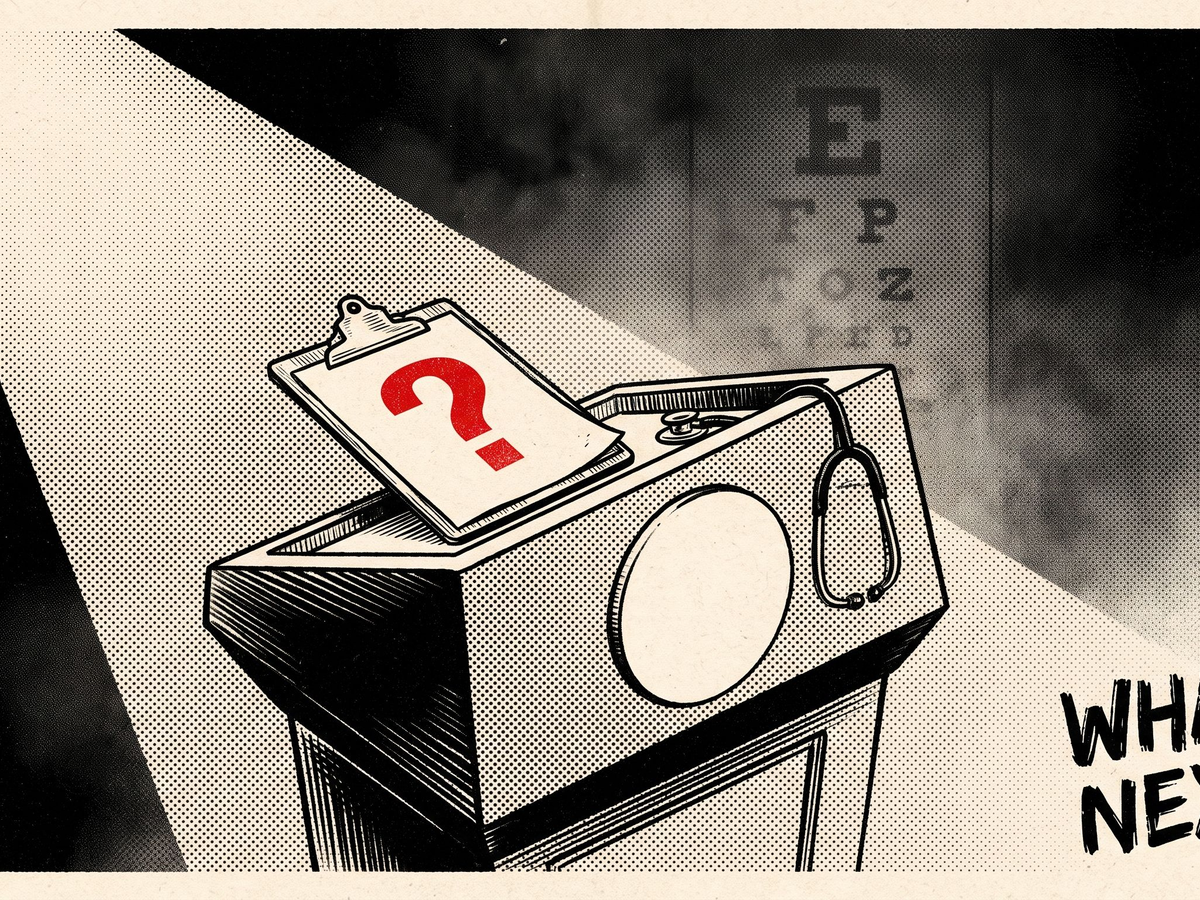
Donald Trump is now the oldest person ever sworn in as president of the United States — 78 years, 7 months on Inauguration Day 2025. (Al Jazeera, Jan. 20, 2025) And the machine that manages what the public gets to know about a president's health is the same kind of machine — a podium, a hand-picked doctor, a controlled statement — that spent the summer of 2024 telling you to distrust a video you watched with your own eyes. |
This is not a piece about whether some guy on the internet can diagnose the president. He can't, and neither can I, and that's not the question. The question is simpler and harder: |
Why does the same disclosure system that told the public to ignore what it plainly saw in 2024 now expect automatic trust in 2026? |
Trust is a thing you extend to people who've earned it. This system has a record of the opposite kind. It spent a summer telling the country not to believe its own eyes, then flipped in 24 days, and never made it right. |
Why BTP says it out loud |
Most outlets covered the 2024 collapse as a horse-race story — who's up, who's out, who leaked what to whom. And most of them are covering the age question now the way you'd expect: softly, when they cover it at all. |
There's a documented gap here. Media Matters, a progressive watchdog, found cable news mentioned Biden's age or health nearly four times as often as Trump's — same beat, same reporters, wildly different volume. (Media Matters) That's not a conspiracy. It's an editorial habit. But habits are how the truth gets managed without anyone ever deciding, out loud, to manage it. |
BTP's job is to name the pattern the beat reporters won't. So here it is: the presidential health-disclosure system is built to protect the presidency, not to inform you. It worked that way in 2024. It's set up to work that way again — and this time 61 percent of the country already senses something's off. (Reuters/Ipsos, Feb. 2026) |
The one number, and what it hides |
That 61 percent is public opinion, not a scoreboard, and not a diagnosis. What it measures is simple: most people, most independents included, already read this president as aging in office. (Reuters/Ipsos, Feb. 24, 2026, n=4,638, ±2 pts) |
When a majority is already uneasy and the man is the oldest ever sworn in, the honest move is to open the books wider than anyone before you. Show more. Explain more. Let outsiders look. A record age and a wary public are a reason for more disclosure, not less. |
Instead, the pattern points the other way — toward less. Toward a summary. Toward "trust us." That's the tell. When the facts should push you toward transparency and power pushes toward the podium instead, the podium has decided the story is more important than the truth. |
How the playbook actually works |
Strip the drama and the machine is boring and mechanical. That's the point. Here's the disclosure playbook, step by step: |
The exam happens inside the building. A physician appointed by and reporting to the president does the workup. Not a neutral panel. Not a board the public chose. Someone whose paycheck and posting run through the man being examined. The public gets a summary, not the file. You don't see the scans. You don't see the labs. You get a letter — a few paragraphs, usually glowing, sometimes with an adjective a doctor would never actually write. A cognitive screen gets sold as a clean bill of health. This is the sleight of hand. Trump's own White House physician, Navy Captain Sean Barbabella, reported a perfect 30-out-of-30 on the Montreal Cognitive Assessment — the MoCA — in the April 2025 physical, and declared him "fully fit to execute the duties of the Commander-in-Chief." (White House Physician memo, April 13, 2025) But the MoCA is a 30-point screen for gross impairment — a smoke detector, not a full inspection. Passing it means you're not on fire. It does not mean the house is sound. It isn't even a standard part of an annual physical. (NBC News; The Hill) Selling a passed screen as "the president is sharp" is a category error, and the people doing it know it's a category error. Anyone who asks for more gets called a partisan. The 2024 move — you're the problem, not the footage — is a permanent feature, not a one-off. Ask for the file and you're smearing. Ask for an outside exam and you hate the guy. The question gets treated as the attack.
|
Four steps. Run it in either direction, red team or blue team, and it protects the president from the public every single time. |
The deep cut |
Go back to the exact words. When the 2024 debate footage went everywhere, the White House response was not "the president had an off night" or "here's the medical context." The response was to attack the evidence. The videos were "cheap fakes." (Al Jazeera; The Hill, June 2024) |
Sit with how strange that is. They didn't argue with the interpretation. They argued that what you saw wasn't real. And the reporting that came later — Jake Tapper and Alex Thompson's book Original Sin, published May 2025 — alleges an inner circle managing the president's decline, narrowing his schedule and controlling his exposure while telling the public everything was fine. (NPR on Original Sin, May 20, 2025) That's the book's reporting, not something BTP is confirming on its own. But its central claim lines up with the timeline everyone watched: the podium said "cheap fake," and 24 days later he was out. |
That's the deep cut. It wasn't that they got the health call wrong. It's that when reality contradicted the plan, they told the country to distrust reality — and then folded inside a month. The playbook's first instinct was never disclosure. It was denial — of the tape, of the eyes, of you. |
Who eats the cost |
Here's where it stops being a media-criticism seminar and starts being about your life. |
You're the one who plans around this. You vote on it. You take a shift, sign a lease, put a kid in a school, plan a surgery, budget a year — all downstream of who's actually running the country and whether they're actually up to it. When the people around power decide the truth is bad for timing, they're not the ones who absorb the fallout. You are. |
You're standing in the grocery aisle doing the math on a cart that costs more than it did last year, trying to figure out if the people in charge even know what a week of your life costs — and the disclosure system's answer to a country where 61 percent already senses the president is slipping is a two-paragraph letter and a "trust us." (Reuters/Ipsos, Feb. 2026) That's the whole relationship in one frame. They manage the story. You live the result. |
A country that can't get a straight answer about the health of the person holding the nuclear codes is not a country being protected. It's a country being handled. |
Between the lines |
Read the timing and the incentives, not the press release. |
An exam runs through a doctor the president chose. A summary comes out instead of a record. A screening test gets dressed up as a verdict. And every request for more gets recast as an attack. None of that is an accident. Each step is designed to give power the last word about power's own condition. |
The 2024 lesson wasn't "Biden was old." Everyone could see that. The lesson was that the system will tell you not to trust your own eyes for as long as the lie is useful — and then drop it the second the lie stops working, with no apology and no accounting. That system didn't retire in January. It just changed patients. |
The public-record test |
This is the whole ask, and it's not partisan. It's the same test for any president of any party: |
An independent exam, signed by physicians who don't work for the man being examined. The actual records — scans, screenings, labs — not a two-paragraph letter. A cognitive workup that goes past a 30-point screen. And full disclosure at least as wide as the age warrants, which for the oldest person ever sworn in (Al Jazeera, Jan. 2025) means wider than anyone before him. |
That's not a gotcha. That's just what earning trust looks like when you're asking for it at a record age — from a public where 61 percent is already uneasy. (Reuters/Ipsos, Feb. 2026) |
Bottom line |
The question was never whether anyone online can diagnose Donald Trump. It's whether the health-disclosure system — the one that told you to distrust your own eyes in 2024 and never apologized when it flipped 24 days later — has earned the automatic trust it's demanding again in 2026, from the oldest president ever sworn in, from a country where 61 percent already say he's "become erratic with age." (Reuters/Ipsos, Feb. 24, 2026) |
It hasn't. Not because of what's wrong with the man — I'm not claiming to know that, and neither is anyone selling you a verdict from a phone. It hasn't earned it because trust isn't something a White House gets to demand. It's something a White House earns, with scans, screenings, records, and an exam signed by someone outside the building. |
Show the file, and I'll believe the letter. Until then, the only thing the podium has proven is that it'll tell you not to trust your own eyes — right up until the day it needs you to. |
Forward this to one person who's tired of being told not to trust their own eyes. |
Watch · Burn the Playbook |
|
Sources |
Reuters/Ipsos — "Most Americans Say Trump Is Growing Erratic With Age," via U.S. News, Feb. 24, 2026 — source CNN — Biden's June 27, 2024 debate performance and fallout — source NBC News — Biden drops out of the 2024 race, July 21, 2024 — source CBS News — Biden drops out, endorses Harris, July 21, 2024 — source Al Jazeera — the White House "cheap fakes" framing, June 18, 2024 — source The Hill — "cheap fake" videos in the spotlight, June 2024 — source NPR — on Original Sin, May 20, 2025 — source Al Jazeera — Trump's inauguration-day age vs. other presidents, Jan. 20, 2025 — source White House Physician memo (primary) — Trump's annual physical, April 13, 2025 (MoCA 30/30) — source NBC News — what the Montreal Cognitive Assessment actually measures — source The Hill — what's on the cognitive tests — source Media Matters — cable mentioned Biden's age or health nearly 4× as often as Trump's — source
|
July 16 is the Final Day to Invest in EnergyX |
|
General Motors, POSCO, and 50,000+ everyday investors already backed EnergyX. Here’s why you should do the same before July 16: lithium prices are up 75% this year, with demand growing 5X by 2040. With tech that can recover up to 3X more than traditional methods, EnergyX is preparing to unlock up to 13M tons. Invest in EnergyX before the 7/16 deadline. |
Invest in EnergyX |
Energy Exploration Technologies, Inc. (“EnergyX”) has engaged Beehiiv to publish this communication in connection with EnergyX’s ongoing Regulation A offering. Beehiiv has been paid in cash and may receive additional compensation. Beehiiv and/or its affiliates do not currently hold securities of EnergyX. |
This compensation and any current or future ownership interest could create a conflict of interest. Please consider this disclosure alongside EnergyX’s offering materials. EnergyX’s Regulation A offering has been qualified by the SEC. Offers and sales may be made only by means of the qualified offering circular. Before investing, carefully review the offering circular, including the risk factors. The offering circular is available at invest.energyx.com/. |
Comparisons to other companies are for informational purposes only and should not imply similar results. Past performance is not indicative of future results. Market shortfall are forward‑looking estimates and are subject to substantial uncertainty. |
|
Burn Notice: The public does not owe powerful people amnesia. |