| Burn the Establishment Playbook | Est. 2025 · Free to the People |
| ★ Independent · Editor-Owned · No Paraphrase ★ Burn the Playbook “The newsletter DC reads and hopes you don’t.” | | Morning Edition | Vol. I · Washington | Wed, Jul 8, 2026 |
|
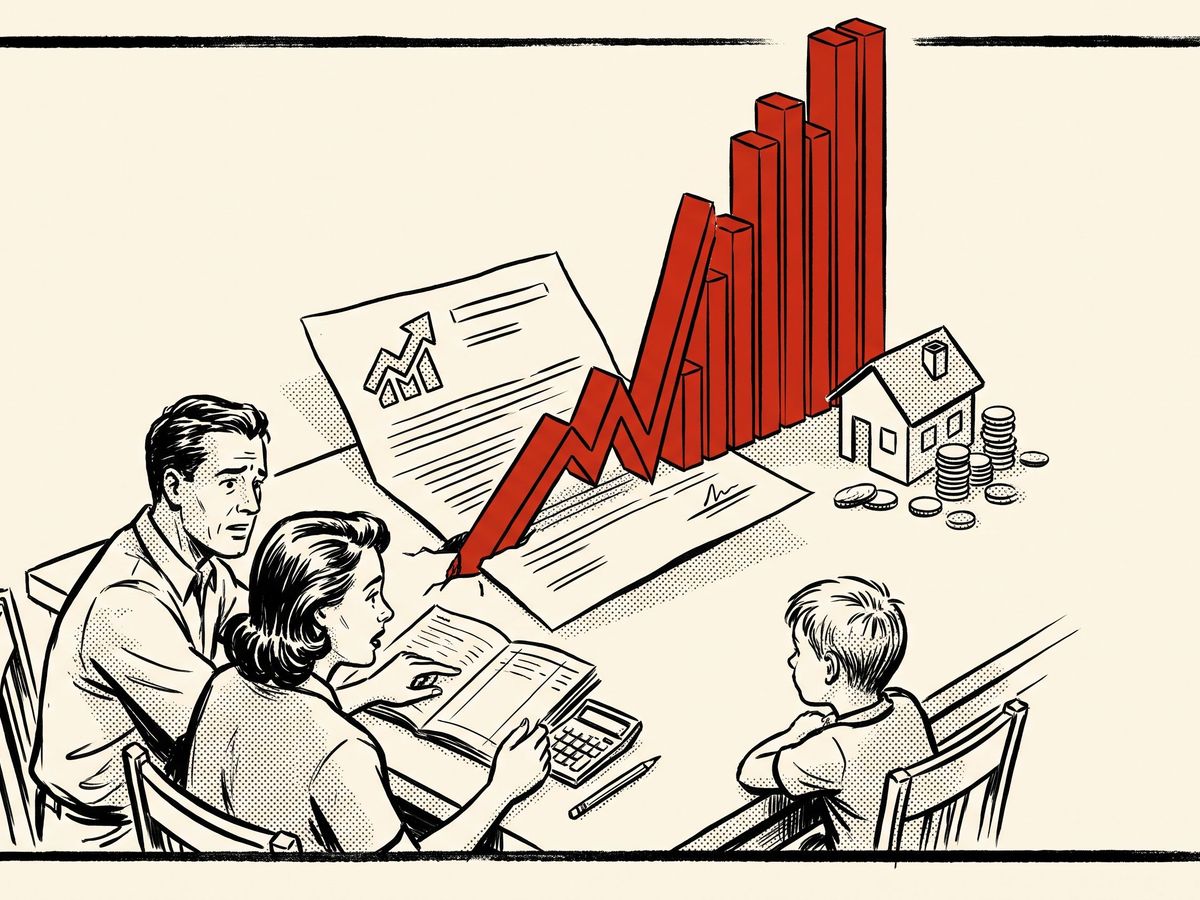
| | Cost-of-living desk. Independent. Plainspoken. Every big claim sourced. | Open your 2026 health insurance renewal and look at the number you actually owe. For millions of Americans who buy their own coverage, it did not creep up. It roughly doubled. | Not five percent. Not fourteen. On the ACA marketplace, what enrollees pay out of their own pocket is rising an average of 114 percent in 2026 — from about $888 a year to $1,904. (KFF, 2026.) Nobody stood at a podium and campaigned on doubling your premium. It happened quietly, because Washington let a subsidy lapse and changed the subject. | The sticker, then the cliff | Start with the price of the plan itself. Across 312 insurers in all 50 states, ACA marketplace premiums are going up an average of 26 percent for 2026 — the sharpest increase since 2018, with a median proposed hike around 18 percent. (KFF, 2026.) That is the cost before a dime of help. | Then the help vanished. The enhanced premium tax credits — the ones that capped what working families paid and pushed marketplace enrollment to a record — expired at the end of 2025. So the 26 percent sticker does not land on a cushion. It lands on a cliff. Stack them together and the premium a subsidized family actually pays more than doubles. More than 20 million people are standing on that ledge. (KFF, 2026.) | Who eats it | This is not an abstraction on a policy blog. It is the self-employed electrician who insures his own family. The 61-year-old who retired two years early and is counting the months to Medicare. The bartender, the freelancer, the small-shop owner, the farmer — the people with no HR department to split the bill. For them, “your premium payment doubled” is not a statistic. It is a car payment’s worth of money, every month, for the exact same card in their wallet. | And a lot of them will simply let go. The Urban Institute and the Commonwealth Fund estimate roughly 4.8 million Americans drop their coverage in 2026 as these costs hit. (Commonwealth Fund / Urban Institute.) That is the quiet part: when you double the price, the market does not absorb it. People just stop being insured, and pray nothing happens to them before it does. | The deep cut | Here is what nobody in leadership wants said plainly: this was a choice, and it has fingerprints. A tax credit is not weather. It has a start date and an expiration date, both written by Congress. Somebody decided the enhanced credits would sunset at the end of 2025, and somebody decided not to spend the capital to extend them. The insurers set the 26 percent. Congress set the cliff. Neither one is an act of God, and both of them show up in your mailbox with your name on the envelope and no one else’s. | I spent twenty years inside Democratic politics, and I watched “we’ll protect your health care” harden into a bumper sticker while the number on the actual bill kept climbing. We were very good at the slogan. We were not in the room when the credit quietly ran out. That is the gap that eats parties alive — the distance between what you say you protect and what people are handed at the kitchen table. | Between the lines | Watch which number gets the coverage. “Premiums up 26 percent” makes the news. The 114 percent — what people actually pay once the subsidy dies — is the one that changes a household, and it is the one that stays buried, because it names a decision instead of a trend. A trend is nobody’s fault. A decision has an author. | Bottom line | The tax on your coffee had an end date. The credit on your health insurance had one too, and Washington let it run out. When your premium doubles and not a single person in power will put their name on it, that is not a market. That is a choice made about you, without you. | Check your 2026 renewal before open enrollment closes. The number is real, and it is not your fault. | Forward this to one person staring at a renewal notice that doesn’t make sense. | Watch · Burn the Playbook | | Sources | KFF — How much and why ACA marketplace premiums are going up in 2026 (median ~18%, insurer charges ~26%) — source KFF — ACA insurers raising premiums an estimated 26%; enrollees could see sharper increases in what they pay — source KFF — Marketplace premium payments more than double (+114%, ~$888 to $1,904) if enhanced premium tax credits expire — source Commonwealth Fund — Putting the extraordinary 2026 ACA premium increase in perspective — source PBS NewsHour — Health subsidies expire, launching millions into 2026 with steep insurance hikes — source
| The Post-Workout Recovery Secret You’re Sleeping On | | Your muscles rebuild when you’re sleeping, and not getting enough sleep can affect your post-workout recovery. CBDistillery’s sleep products are formulated to support your sleep naturally; in a 2021 study, participants reported sleeping an hour longer on average after taking CBDistillery’s combination of CBD and CBN. Save 25% with code SLEEPMORE. | Support Your Sleep | Burn Notice: Insurers set the 26 percent. Congress set the cliff that doubles what you pay. Both had your name on it. Neither will sign it. |
|