| Burn the Establishment Playbook | Est. 2025 · Free to the People |
| ★ Independent · Editor-Owned · No Paraphrase ★ Burn the Playbook “The newsletter DC reads and hopes you don’t.” | | Morning Edition | Vol. I · Washington | Sat, Jul 11, 2026 |
|
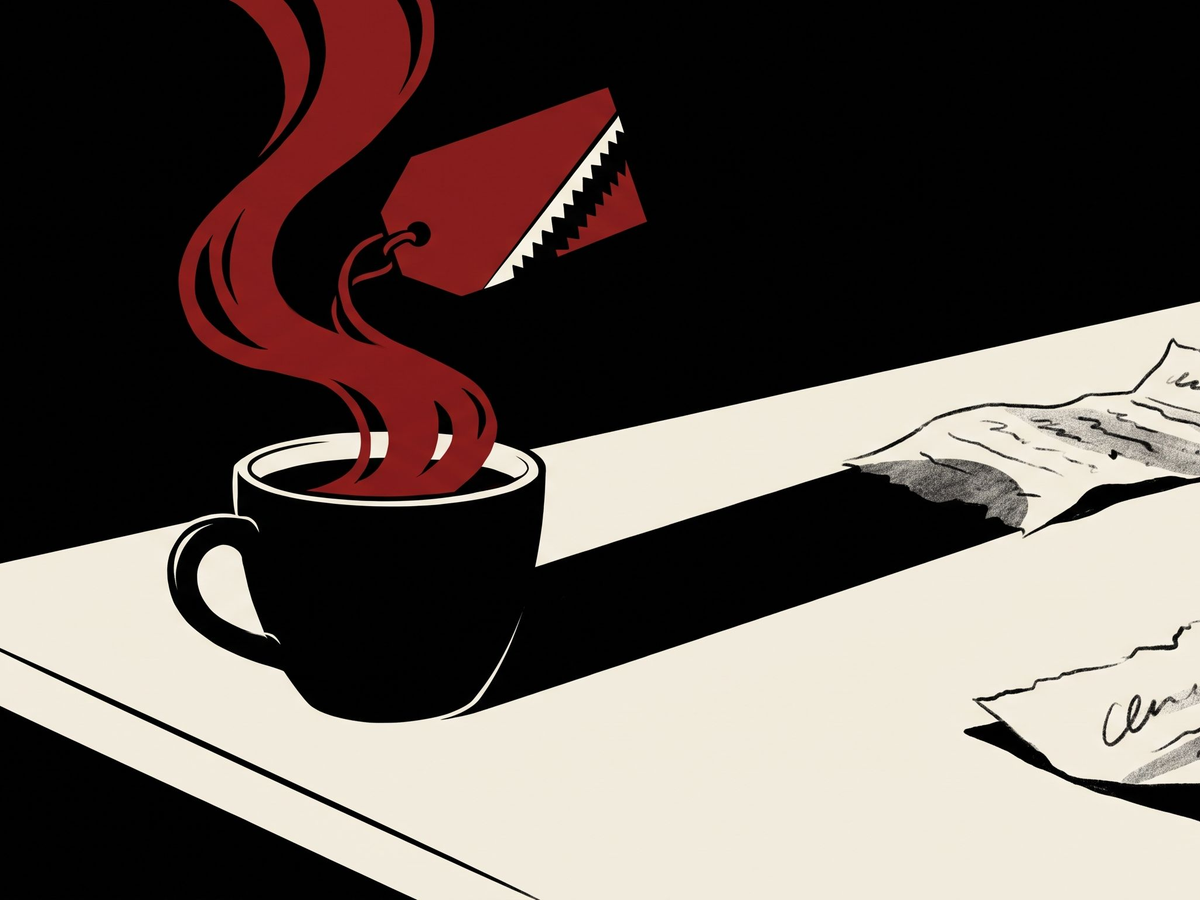
| | Trump pulled the tariffs off coffee in November 2025. The tax that was supposedly driving your grocery bill through the roof, gone. So your coffee got cheaper. Right? (Reuters, December 19, 2025) | It did not. The raw bean got cheaper. The bag on the shelf did not. And the company that roasts it just told its investors why: they are keeping the difference, and calling it discipline. | Why this, why now | Trump rolled back reciprocal duties of 10 to 41 percent on more than 200 food items Americans cannot grow at home, coffee included, after Democrats won New Jersey, New York and Virginia and the White House finally noticed people were doing math in the grocery aisle. Brazil, which supplies about a third of America's beans, got its extra 40 percent tariff lifted too. (Reuters, December 19, 2025) | You would think the price of your coffee would follow the tariff back down. It has not. The BLS coffee index was up 18.5 percent over the year to April 2026, with roasted ground coffee up 17.3 percent and instant up 22.8 percent. The average pound of roasted ground coffee hit $9.72 at the grocery store in April 2026, the highest on record since the government started tracking it in 1980. (BLS Consumer Price Index, 2026; Daily Coffee News, May 15, 2026) | The tax is gone. The bill is not. | By the Numbers | BLS coffee index up 18.5% over the year to April 2026 — roasted ground +17.3%, instant +22.8% — per BLS CPI, 2026 $9.72/lb — average grocery price for roasted ground coffee in April 2026, an all-time record since tracking began in 1980 — per Daily Coffee News, May 15, 2026 Raw bean prices dropped only ~6% after the tariff was lifted — against shelf-price hikes three times that size — per Reuters, Dec 19, 2025 J.M. Smucker FY2026 net sales hit $9.1 billion, up 4% — with coffee pricing doing most of the work — per Smucker Q4 FY2026 earnings, Jun 9, 2026 Food-at-home prices up 2.9% year-over-year to May 2026 — coffee ran roughly six times that — per BLS CPI
| The number they buried | Raw coffee bean prices, the actual input cost that companies blamed for the price hikes, have fallen only about 6 percent since Trump reversed the tariffs. Six percent. Against price increases at the register that ran three times that size. (Reuters, December 19, 2025) | Meanwhile J.M. Smucker, the company that owns Folgers, Dunkin' at-home coffee and Café Bustelo, told investors its coffee segment posted double-digit net sales growth driven almost entirely by "net price realization," which is a suit's way of saying they charged more for the same bag. For the full 2026 fiscal year, reported June 9, 2026, Smucker's total net sales hit $9.1 billion, up 4 percent, with pricing doing most of the work. (J.M. Smucker Q4 FY2026 earnings release, June 9, 2026) | That is the number they hope you never connect: the input got cheaper, the shelf price did not, and the company's sales grew off the gap. | How the trick works | A cost shock hits. Tariffs, drought, whatever the excuse. Raw bean prices spike, companies raise shelf prices to match, and they tell you it is the tariff's fault. The cost shock fades. The tariff gets repealed, the input price starts to ease, and nobody rushes to tell you that part. The company "pauses," it does not reverse. Days after the Brazil coffee tariff came off, Smucker said it would no longer raise prices further to cover tariff costs. It did not say it would lower the prices it had already raised. (Reuters, December 19, 2025) The margin becomes the new normal. Roasters hold two to three months of bean inventory and only renegotiate with retailers quarterly, which gives them cover to sit on the higher price long after the reason for it disappeared. (Reuters, December 19, 2025)
| That lag is not a technical glitch. It is the business model. Prices go up on a press release. They come down, if they come down, on nobody's schedule but the shareholder's. | The deep cut | Here is the sentence that should be in every Democrat's stump speech. A mid-sized U.S. roaster's own CEO told Reuters, on the record, in December 2025: "We're very pleased that tariffs are gone, but it's not enough to bring this market down." And the CEO of Lucatelli Coffee put words to the whole scam: "Coffee prices rise more quickly than they fall." (Reuters, December 19, 2025) | Read that again. These are not Democratic talking points. These are coffee executives, describing their own industry's pricing behavior, out loud, to a wire service. The tariff was real. The pass-through was real. And the industry's own people are telling you the correction back down is optional. | Who eats the cost | Not the shareholders. Smucker's coffee pricing power padded a $9.1 billion year. Not the executives who get to explain "net price realization" on an earnings call in a nice suit, to analysts who nod along. | It is the person filling a thermos before a double shift who eats it. It is the church basement running a Sunday coffee hour on a fixed budget. It is the small diner where the owner has already raised the price of a cup twice this year and is doing the math on whether a third increase loses the regulars. Food-at-home prices rose about 2.9 percent over the year to May 2026. Coffee ran roughly six times that, and it is one of the few grocery items almost nobody can just stop buying. (BLS Consumer Price Index, 2026) | And it lands hardest where there is the least cushion to catch it. The typical Black family holds a fraction of the wealth the typical white family does, so a permanent markup on a staple is not an annoyance. It is a tax aimed at the households least able to absorb it. I think about the corner stores and the church coffee hours in my own community, where a dollar more a bag is not a rounding error. It is a choice somebody has to make. When a company turns a temporary tariff into a forever price, it is quietly deciding that the people with the thinnest margins will cover the difference. | Between the lines | This is not really a story about coffee. It is a story about who gets to decide what "the tariff made me do it" means, and for how long. A tariff is a tax. Taxes have start dates and end dates. Corporate pricing power does not come with an expiration clock unless somebody makes them put one on it. Right now nobody is. Not the White House that lifted the tariff and moved on to the next headline. Not a regulator asking Smucker to show its receipts before it locks in a "new normal" price built on a cost that is already cheaper and dropping. | When Democrats go looking for a corruption message that lands in a kitchen instead of a cable-news green room, this is it. It is not a conspiracy. It is a business plan, and the paper trail is sitting in an earnings release. | Bottom line | The government's tax on your coffee is gone. The company's tax on your coffee is still running, and Folgers is calling it business as usual because so far, nobody has told them it is not. When you pour that cup tomorrow, know exactly what you are paying for. Not a tariff anymore. Just a company that found out you would pay it either way. | Forward this to one person who still thinks the coffee tariff is why their bag costs six dollars more than it did two years ago. | Watch · Burn the Playbook | | Sources | U.S. Bureau of Labor Statistics Consumer Price Index: coffee up 18.5% over the year to April 2026 (roasted ground 17.3%, instant 22.8%); food-at-home 2.9%. source Daily Coffee News U.S. grocery roasted coffee hit a record $9.72/lb in April 2026. source Reuters tariff rollback timeline, ~6% bean-price drop, Smucker pricing pause, executive quotes, December 19, 2025. source J.M. Smucker Co. Q4/full-year FY2026 earnings, net sales $9.1B up 4%, coffee pricing driver, June 9, 2026. source Food Dive Smucker coffee price hikes and tariff cost guidance. source
| Burn Notice: J.M. Smucker took the tariff off, kept the markup, and called that pricing discipline. |
|