| | Burn the Establishment Playbook | Tuesday PM | June 30, 2026 | Burn the Playbook | The column DC reads and hopes you don't. | 2026 Midterms | Health care costs | ACA credits |
| |
|
|
The Premium Notice Is Campaign Mail |
Health care costs are not a debate-stage issue in 2026. They are the envelope on the table, the pharmacy total, and the deductible that turns insurance into a locked door. |
By Michael Starr Hopkins |
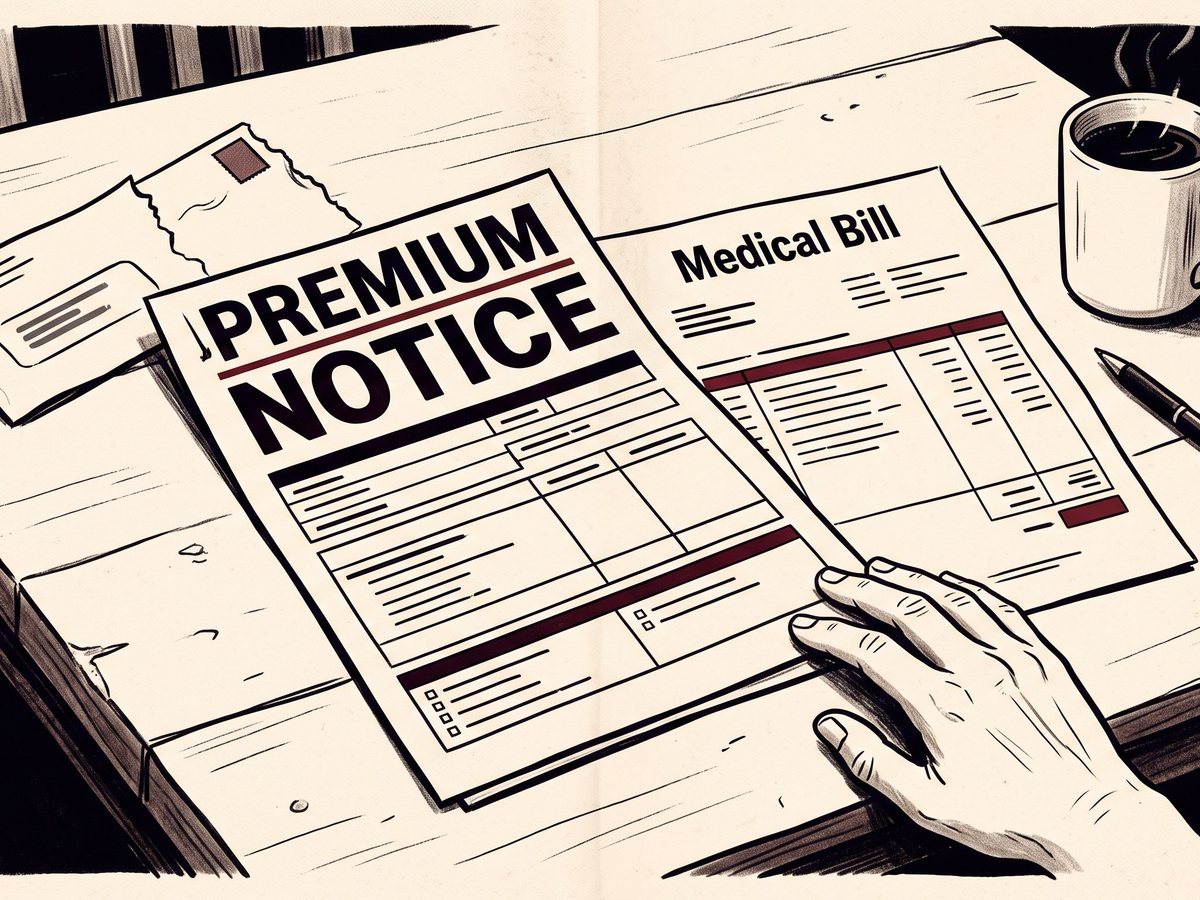
 | Issue art: the premium notice is already doing campaign work. |
|
| | The notice -> The vote -> The bill -> The 2026 fight | That is the path. The envelope is not background noise. It is the campaign mail voters actually open. |
| |
|
|
| | Pressure board | 66% worried | Adults worried about affording health care for themselves and their families. | 67% say Congress got it wrong | Adults who said Congress was wrong not to extend the enhanced ACA premium tax credits. Among independents: 72%. | 80% say 2026 costs rose | Returning ACA marketplace enrollees who said premiums, deductibles, or copays were higher. | 55% cutting food or basics | Marketplace enrollees cutting or planning to cut spending on food or other basics. | Source: KFF Health Tracking Poll, Jan. 13-20, 2026; KFF Follow-Up Survey of ACA Marketplace Enrollees. |
| |
|
|
The Post-Workout Recovery Secret You’re Sleeping On |
|
Your muscles rebuild when you’re sleeping, and not getting enough sleep can affect your post-workout recovery. CBDistillery’s sleep products are formulated to support your sleep naturally; in a 2021 study, participants reported sleeping an hour longer on average after taking CBDistillery’s combination of CBD and CBN. Save 25% with code SLEEPMORE. |
Support Your Sleep |
A voter does not need a policy memo to understand health care costs. They have the bill. |
They have the premium notice. They have the pharmacy counter total. They have the deductible sitting there like a dare. They have the appointment they keep moving because the copay is not the only cost. Missing work costs money too. Gas costs money. Child care costs money. Getting sick in America comes with its own payment plan. |
That is why health care belongs at the center of the 2026 midterms. Not because cable panels need another issue to rank. Because people can hold this one in their hand. |
KFF found 66 percent worried about affording health care, 55 percent said their health costs had gone up in the past year, and 56 percent expected costs to become less affordable. That number does not predict the election. It shows pressure. For millions of families, health care is the economy. |
| | Campaign graphic | The Standard | If your health care plan does not lower the bill people actually pay, it is not an affordability plan. It is a press release with better shoes. | The Firewall | Do not let anyone turn a premium spike into private bad luck. When the same bill keeps showing up in kitchens across the country, that is public design. |
| |
|
|
The bill voters can hold |
The ACA marketplace is not the whole health care system. It is the warning light on the dashboard. |
| | The bill got bigger: ACA marketplace only | Premium payment: $113 -> $178 | Average monthly ACA marketplace premium payments rose 58 percent. | Deductible: $2,759 -> $3,786 | Average deductibles rose 37 percent. | Source: KFF 2026 ACA marketplace analysis. |
| |
|
|
KFF's May 2026 marketplace analysis found average monthly ACA marketplace premium payments rose 58 percent, from $113 to $178. Average deductibles rose 37 percent, from $2,759 to $3,786. That is not an abstraction. That is a family deciding whether they can afford the plan, the visit, the medicine, or the risk of going without. |
KFF's follow-up survey of ACA marketplace enrollees found 80 percent of returning enrollees said their 2026 premiums, deductibles, or copays were higher, with 51 percent saying a lot higher. Fifty-five percent were cutting or planning to cut spending on food or other basics. Forty-three percent were taking extra work or more hours. Twenty-three percent were skipping bills. Twenty percent were using loans or credit-card debt. |
| | Three boxes, one sentence | Ownership | Republicans have the ownership problem. | Trust | Democrats have the trust problem. | The bill | Voters have the bill. |
| |
|
|
The public record |
On Jan. 8, 2026, the House passed H.R. 1834 by a 230-196 vote, with 213 Democrats and 17 Republicans voting yes. CBO said the bill would extend the enhanced premium tax credit structure through 2028. House passage did not make it law. It made the question cleaner: who is willing to restore the help before open enrollment, and who is willing to let families absorb the bill? |
| | House vote strip | 230 yes / 196 no | House Roll Call 11 on H.R. 1834. | 213 Democrats yes / 17 Republicans yes | The vote clarified the question; it did not make the bill law. | Source: House Clerk Roll Call 11 and CBO estimate for H.R. 1834. |
| |
|
|
CMS also created a hardship pathway so some consumers could buy catastrophic coverage for 2026 because individual-market premiums were expected to rise substantially. Catastrophic coverage can lower the monthly premium, but it also means more cost exposure when something actually goes wrong. |
The Republican problem is ownership. The credits expired on their watch, and the bill showed up in voters' mailboxes. The House vote shows some Republicans crossed over, but the governing problem remains: the help expired, and voters are paying more or buying down into worse coverage. |
The Democratic problem is trust. If they talk like a committee, they lose the kitchen table. If their answer to a premium spike is a white paper, they already lost the room. |
Open enrollment is going to do more persuasion than most campaign ads. People will see the premium. They will see the deductible. They will see what kind of plan they can afford. The party that can explain that bill in one breath has a fight. The party that hides behind process language deserves to get run over by the envelope. |
| | Candidate script tear-off | Ask this | Will you vote to restore the enhanced ACA credits before open enrollment, or are you fine letting families buy worse coverage to stay insured? | Yes or no | No committee language. No fog. The bill is already in the mailbox. |
| |
|
|
Your move |
The premium notice is already making the argument. The question is whether anyone in politics has the nerve to point at it. |
Do one thing today: send the question to your member. Forward this issue to one person who has delayed care, stretched a prescription, or stared at an insurance bill and had to do the math twice. |
|
| | Source desk | The polling: KFF Health Tracking Poll; KFF Follow-Up Survey of ACA Marketplace Enrollees; KFF 2026 ACA marketplace analysis. | The public record: HealthCare.gov marketplace notices; House Clerk Roll Call 11 on H.R. 1834; CBO estimate for H.R. 1834; CMS hardship exemption guidance; CMS catastrophic plans fact sheet. | |
| |
|
|
Burn the Playbook | May the bridges we burn light our path forward. | Edited by Michael Starr Hopkins | Founded 2025 | Independent | Editor-owned | Every name sourced |
|
|