live fileWednesday, April 29, 2026● Live on Beehiiv
He Wasn't the Monster. He Was the Money.
Eleven women are suing Les Wexner. Jon Husted already voted.
By Michael Starr Hopkins
13 min read0 receipts0 features
The VerdictEleven women are suing Les Wexner. Jon Husted already voted.The Proof0 receipts attachedThe ActionRead it, send it, and get the next receipt before the room catches up.Get the next receipt →
The full report is below — also published on Beehiiv — with its receipt trail and source ladder. Every claim below clears at two-of-three independent sources before publication, with right-of-reply offered to every named subject.
All burns original. Every name sourced. Every comfortable version killed.
The Wexner Files · The Vote · The Money
THE MONEY
Eleven women are suing Les Wexner. Jon Husted already voted.
By Michael Starr Hopkins · 6:00 A.M. E.T.
Read time: 6 minutes · Why now: the files came out after the vote
He wasn't the monster. He was the money.
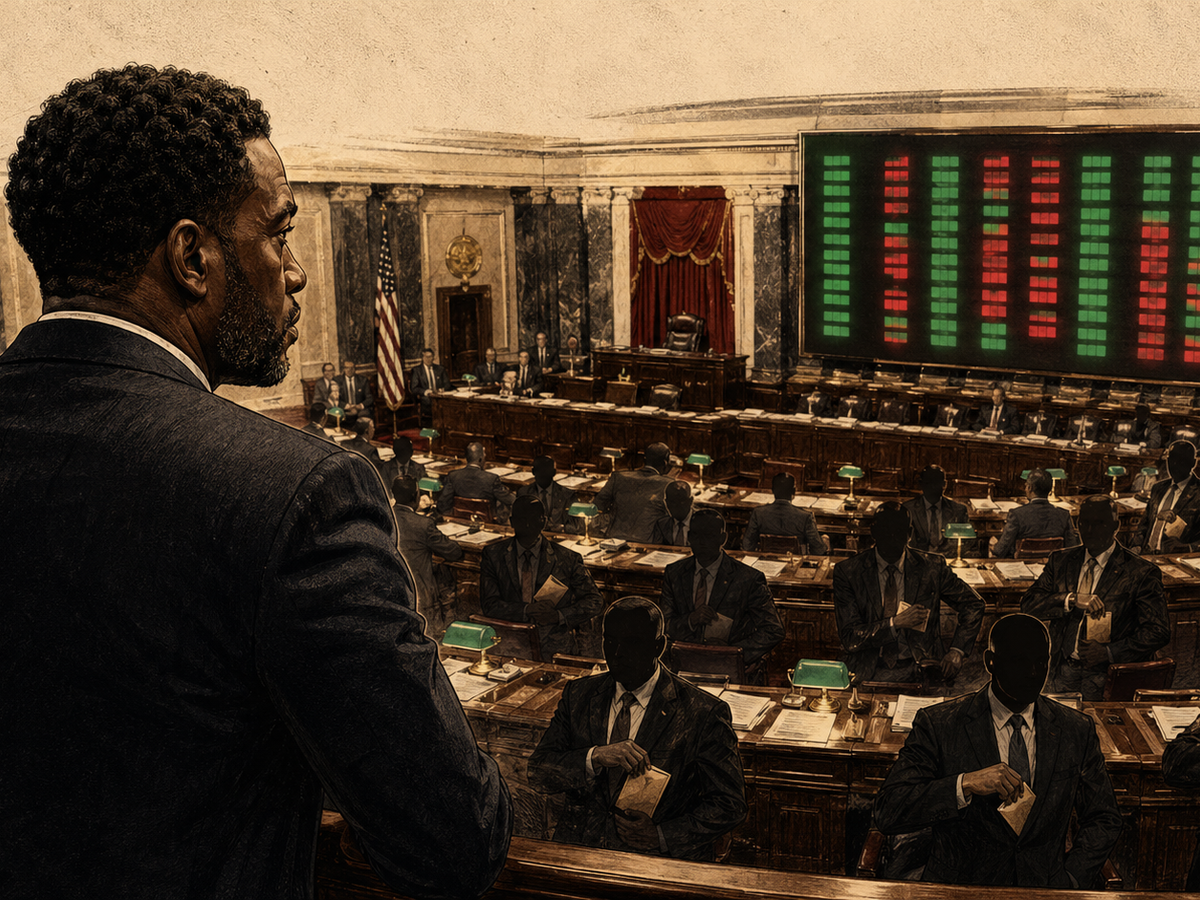
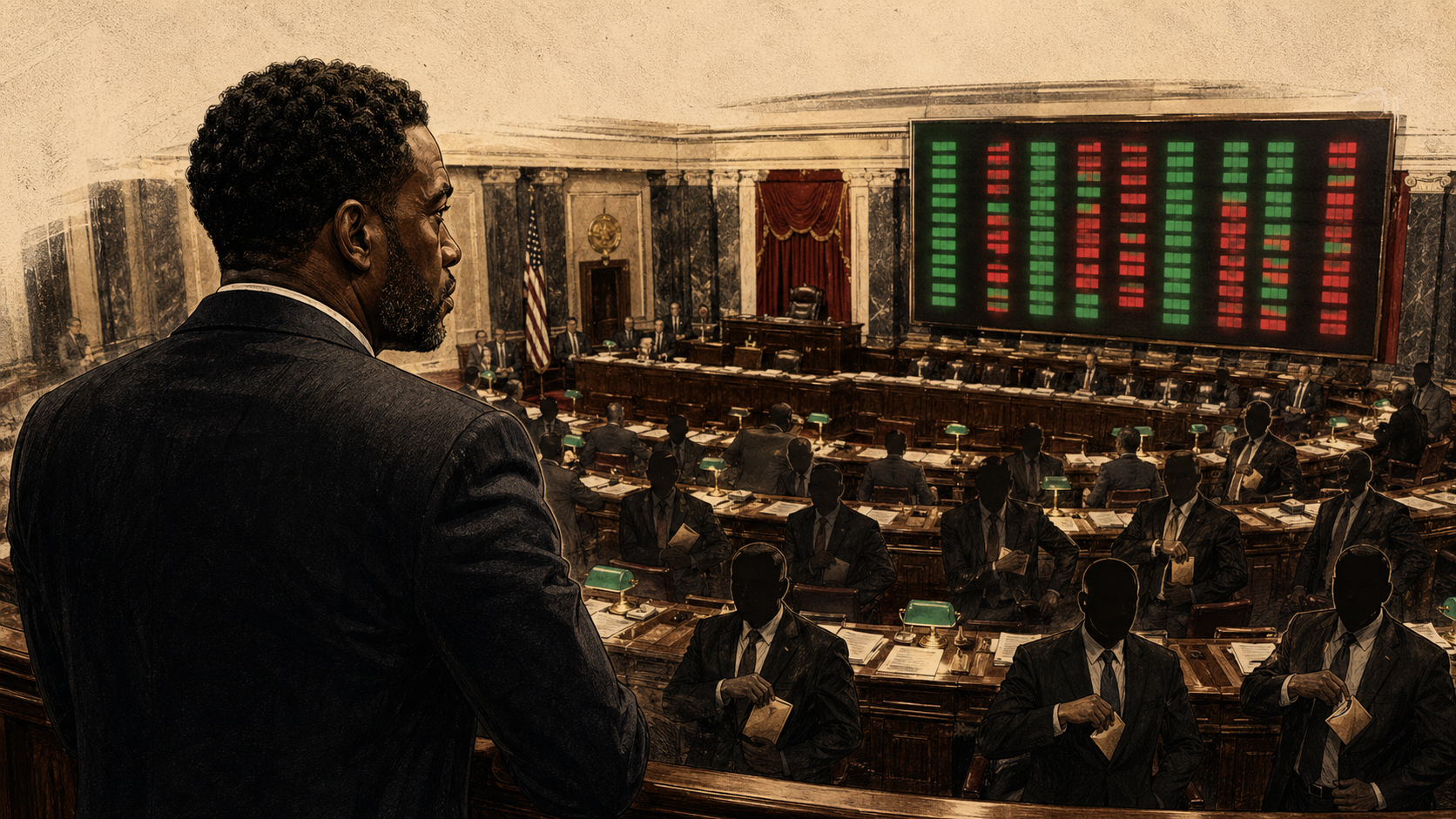
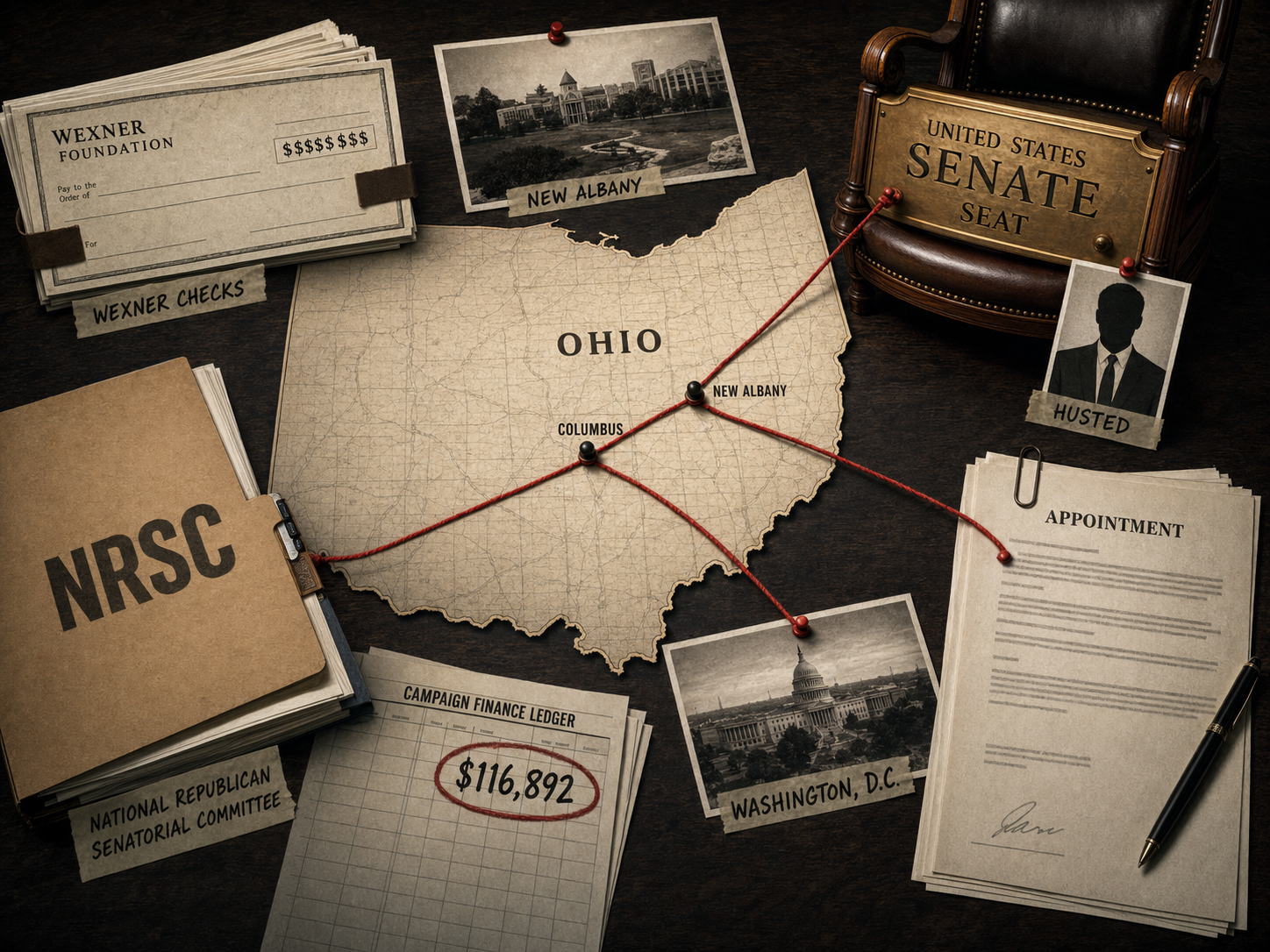
Editorial illustration: the vote, the chamber, and the money relationship underneath the roll call.
Washington - Eleven women filed a lawsuit in March. Not against Jeffrey Epstein, who is dead. Against Les Wexner, who is alive.
Against the Wexner Foundation. Against the LLC connected to the Manhattan townhouse where, the women allege, Epstein abused them.
Les Wexner is the founder of L Brands. Owner of Victoria's Secret. Builder of New Albany, Ohio. The man who gave Jeffrey Epstein power of attorney over his fortune.
For sixteen years.
Epstein could sign Wexner's checks. Buy Wexner's property. Hire Wexner's people. Borrow Wexner's money. For sixteen years, Epstein had the financial authority of a billionaire. For sixteen years, that power had one source.
The complaint does not argue Wexner was the monster. It argues he was the money.
The Full Dossier
This is the newsletter version. The full feature is longer, wider, and names the vote for what it was: fifty-one senators choosing delay when the public deserved disclosure.
Inside: 18 findings, 3 hot loops, the Senate roll call, the Wexner money trail, the Husted timeline, the Ohio machine, and the full question Washington still has not answered.
If they know the name Wexner, they should know the vote too.
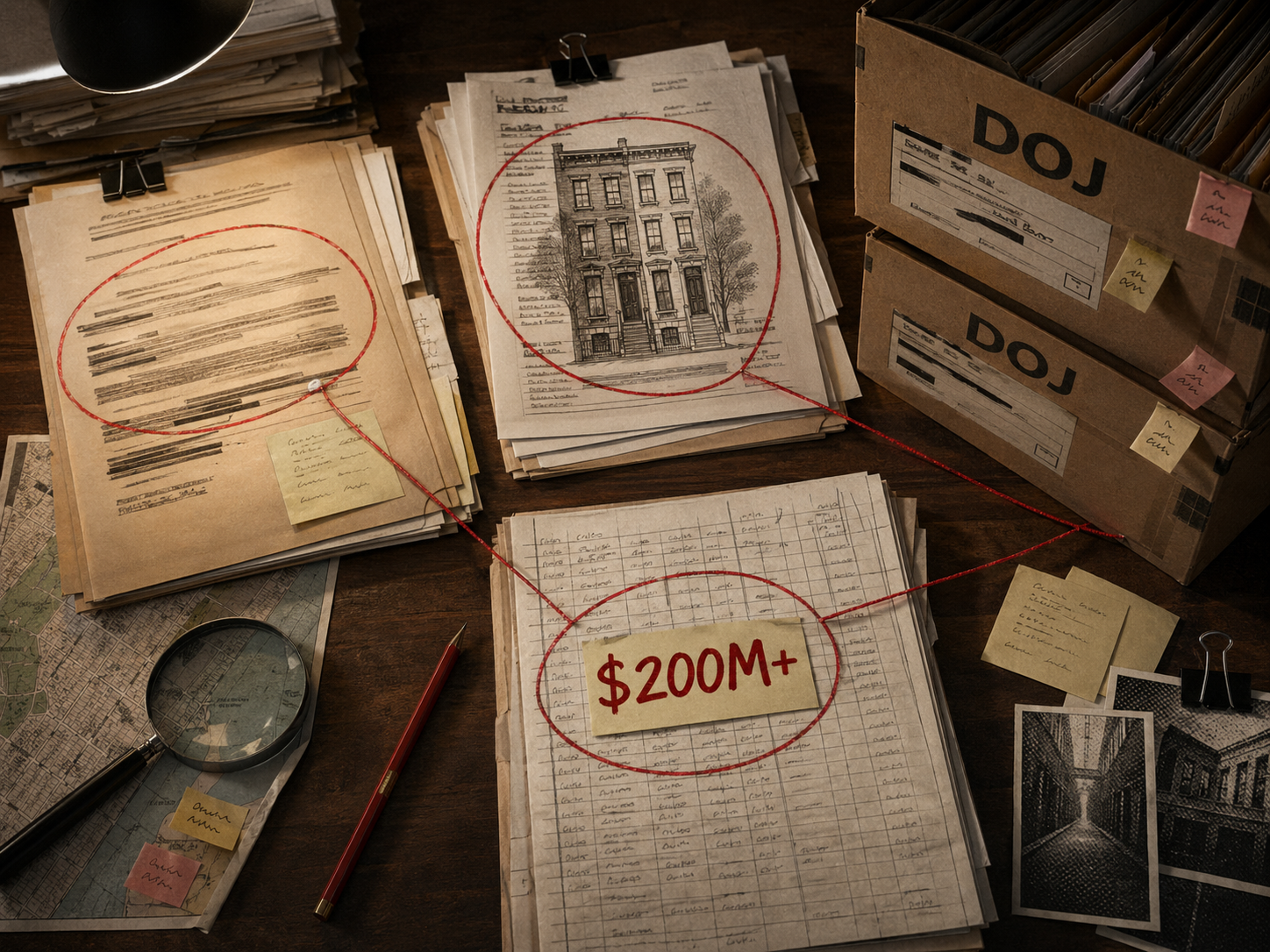
Forward The IssueThe ReceiptsDocument trail: power of attorney, townhouse records, DOJ files, and the civil complaint's $200M+ allegation.
№01
Eleven women filed suit.
The complaint alleges Wexner transferred more than $200 million to Epstein, money used to build the trafficking network. Three plaintiffs were seventeen years old when the alleged abuse occurred.
№02
The files named Wexner more than one thousand times.
DOJ released 3.5 million pages in January. Wexner was deposed in February. Democrats accused him of lying under oath.
№03
Husted took the money before the vote.
On July 3, 2025, Wexner sent Jon Husted $3,500. Sixty-nine days later, Husted voted to table the amendment ordering DOJ to release the Epstein documents.
№04
The relationship was not one check.
Wexner gave Husted $116,892 across twenty-one donations over twenty-four years. The check does not have to say anything. The check is the message.
№05
The vote was Roll Call 512.
On September 10, 2025, the Senate voted 51 to 49 to table SA 3849. Only two Republicans crossed: Rand Paul and Josh Hawley. Husted said, "Transparency cannot become a weapon." Then he voted.
№06
The NRSC got $250,000.
Wexner gave the Republican Senate campaign arm $250,000 in 2025, the same committee built to protect and expand the Senate majority that voted to table the files amendment.
№07
The estate cost $37 million.
Wexner bought a Martha's Vineyard estate in July 2025. The same New Albany attorney tied to his charitable infrastructure held the trust on the property.
№08
The public record does not prove a criminal exchange.
It proves a sequence that demands an answer: money, relationship, vote, files, deposition, lawsuit. The question is the relationship, not the movie version of bribery.
11
Plaintiffs in the civil suit
I worked in politics long enough to know how a $3,500 check works.
It does not buy a vote the way it looks in a movie, with a suitcase and a handshake at the back of a restaurant. It buys a relationship. It buys the sense that a man like Les Wexner has found you acceptable.
The money is not always a crime. The money is a relationship. And the relationship is the point.
The question is not whether $3,500 bought the Epstein vote. The question is what twenty-four years and $116,892 builds.
What this does not prove
It does not prove a criminal exchange. It does not prove Husted changed his vote because of one check. Husted's office is entitled to dispute the implication.
What it does prove
A billionaire whose name later appeared throughout the Epstein files gave money for years to a senator who voted to table the release amendment before the files came out. That is enough to demand an answer.
Ohio machine: Wexner checks, NRSC money, an appointment path, and the Senate seat Husted did not win.
2026 Watch
Ohio is not a side story. It is the map.
Jon Husted sits in a Senate seat he did not win. Sherrod Brown wants it back. Bernie Moreno is already part of the same Wexner-money conversation.
The 2026 question in Ohio is not just whether Democrats can win a Senate race. It is whether anyone can make voters believe the system still has a bottom.
Screenshot this: The most dangerous Senate candidate in 2026 may be the one who has to explain why he voted before the women sued.
What a Democrat should say
"This is not about party. It is about whether a senator works for the people who sent him or the donors who found him acceptable."
What a consultant will tell them not to say
They will tell the candidate to talk about process, kitchen-table issues, and moving forward. That is how corruption survives: one softer synonym at a time.
2028 Watch
The 2028 Republican primary is not a coronation. It is an audition for humiliation.
Trump will drag it out because that is what he does. Every candidate will have to perform loyalty in public and pretend it is strength.
The Democratic side is just as open, and the party still does not want to admit it. The buffet model is dead. Voters know when a nominee has been assembled by donor appetite and consultant anxiety.
Screenshot this: The next president is probably the first candidate in either party willing to embarrass the people who expected obedience.
The 2028 lane belongs to whoever makes donor comfort look weak.
Three Stories You Need
The Hill
DOJ faces audit on Epstein files transparency.
The audit fight keeps this story alive. The question is no longer only what was in the files. It is who fought to delay them and who is now trying to clean up the record.
Ohio Capital Journal / WOSU
Ohio State is investigating Epstein-linked payments.
The university inquiry matters because the Wexner story is not only national. It runs through Ohio institutions, Ohio politics, and the donor network around both.
Senate Roll Call 512
The vote is the receipt.
Procedural explanations are still explanations. A motion to table is not a shrug. It is a choice, recorded by name, on the day the Senate could have demanded release.
Next: the audit demanders, the senators asking DOJ to explain the files, and the names that suddenly want to sound like transparency champions after the vote already happened.
Subscribe before the cleanup begins.
The first vote is usually the truth. The second statement is usually the lawyer.
I have been in the rooms where donor comfort gets treated like public wisdom. That is why I do not trust the soft version of this story.
The public record does not need us to pretend certainty where the documents do not give it. It needs us to stop pretending the relationship is invisible.