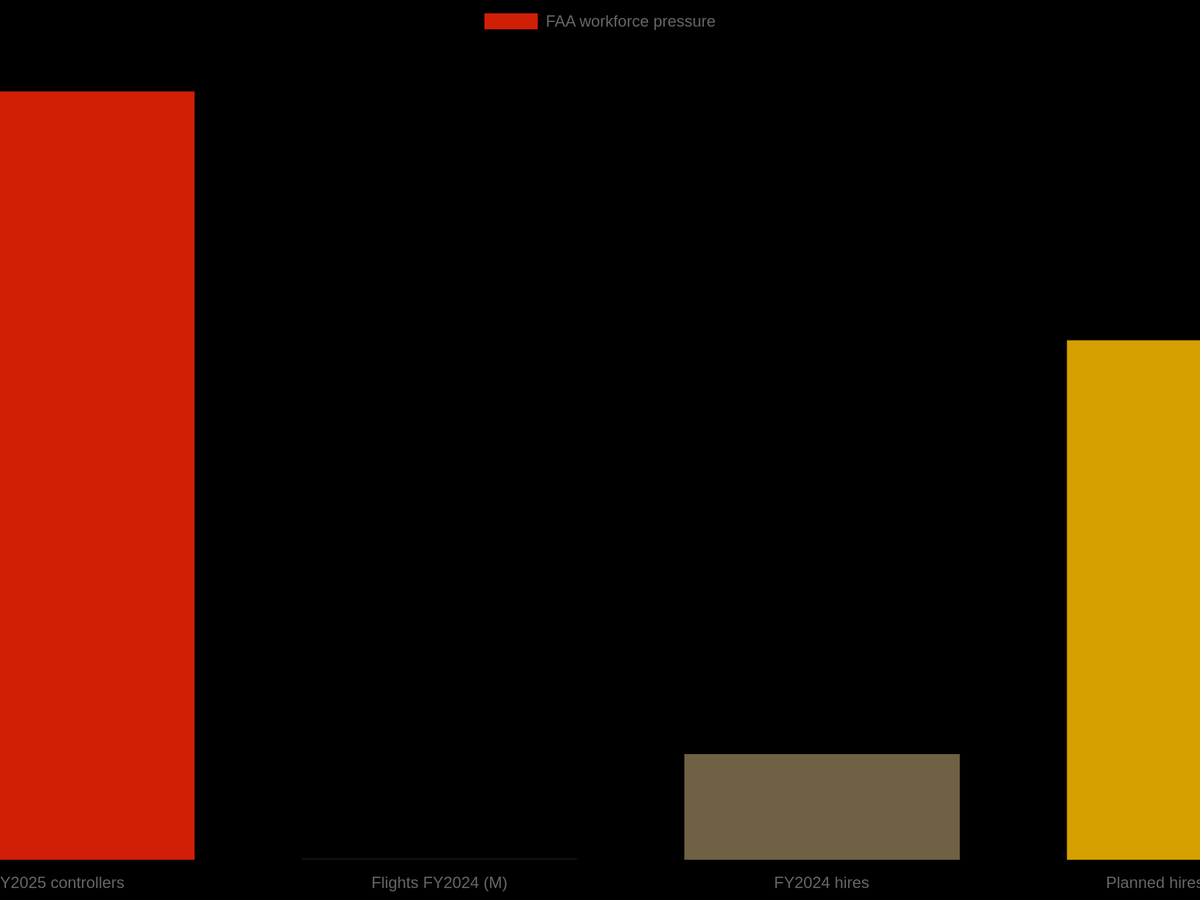
Burn the Playbook | Independent. Editor-owned. Built for people who still want the record. | Fewer Controllers. More Flights. Same Sky. | By Michael Starr Hopkins | The air-traffic-control crisis is not a mystery. It is a staffing chart. | GAO says the FAA ended fiscal year 2025 with 13,164 controllers, about 6 percent fewer than in 2015. Over roughly the same stretch, total flights using the air traffic control system rose about 10 percent to 30.8 million. The FAA says it hired 1,811 new controllers in fiscal 2024 and plans at least 8,900 more hires through 2028. | That sounds like progress until you remember how this job works. Hiring is not certification. GAO says the process can take two to six years, including medical clearance, security checks, aptitude screening, academy training, and facility certification. You cannot fix a staffing hole in the sky with a press release on the ground. | | Source labels: GAO and FAA Air Traffic Controller Workforce Plan. | The Machine | More planes. Fewer people. Same sky. That is the whole policy problem in six words. | The FAA is trying to hire, but the pipeline is slow because the job is not normal desk work. A trainee has to get through screening, the academy, facility training, and certification. A controller can be counted in the pipeline for years before they are the person actually working a busy scope at night with weather moving in. | That lag is why staffing shows up as delays, overtime, compressed schedules, transfer fights, facility shortages, and risk. The public experiences it as a late flight. The controller experiences it as another shift where the system needs one more person than it has. | The Proof | Newark made the staffing math visible. A June 10, 2025 Federal Register order said Philadelphia TRACON had been responsible for the Newark area since July 2024. The facility target was 114 certified professional controllers, with 82 onboard, or 71.9 percent staffed. Area C, which oversees Newark, had a target of 38 certified professional controllers and 24 on staff, or 63 percent staffed. | That is not a vibe. That is the government putting the staffing shortfall in the public record while limiting Newark operations because capacity, delays, equipment problems, and staffing all collided. | | Source label: Federal Register, Operating Limitations at Newark Liberty International Airport, June 10, 2025. | Who Pays | The traveler pays in delay. The controller pays in fatigue. The trainee pays in pressure. The airport worker pays when a bad day in the system turns into a bad week of cancellations, missed connections, angry passengers, and overtime everywhere else. | And the public pays in safety margin. Aviation is safe because it is supposed to be boring on purpose. Staffing shortages make it less boring in exactly the wrong way. | Between The Lines | The easy political line is modernization. New systems. Better equipment. More technology. Fine. Modernize the equipment. | But the strongest radar in the world still needs rested human beings making clean decisions under pressure. Hardware does not replace staffing. It sits next to staffing. When politicians sell one without funding the other, they are decorating the runway. | Hiring | This fight needs investigators, organizers, lawyers, data people, policy writers, local reporters, and designers who can turn records into pressure. | | Bottom Line | GAO found fewer controllers than a decade earlier while flights rose. FAA says it is hiring thousands, but the pipeline takes years. Newark showed the hard truth: one key airspace team was 63 percent staffed. The sky does not care about talking points. It cares whether enough trained people are in the chairs. | One action: The next time your flight is delayed for air traffic control, ask which facility is short and how many certified controllers it has on board. | Watch · BTP | | Sources | | Keep BTP independent: Share this with someone flying this summer. | Subscribe to Burn the Playbook | Manage preferences | Unsubscribe |
|