| | Burn the Establishment Playbook | Free to the People |
| |
|
| | | Independent | Editor-Owned | No Paraphrase | Burn the Playbook | The column DC reads and hopes you don't. | The Standard: Two of three sources. One a document. | The Firewall: Economics, never coverage. |
| |
|
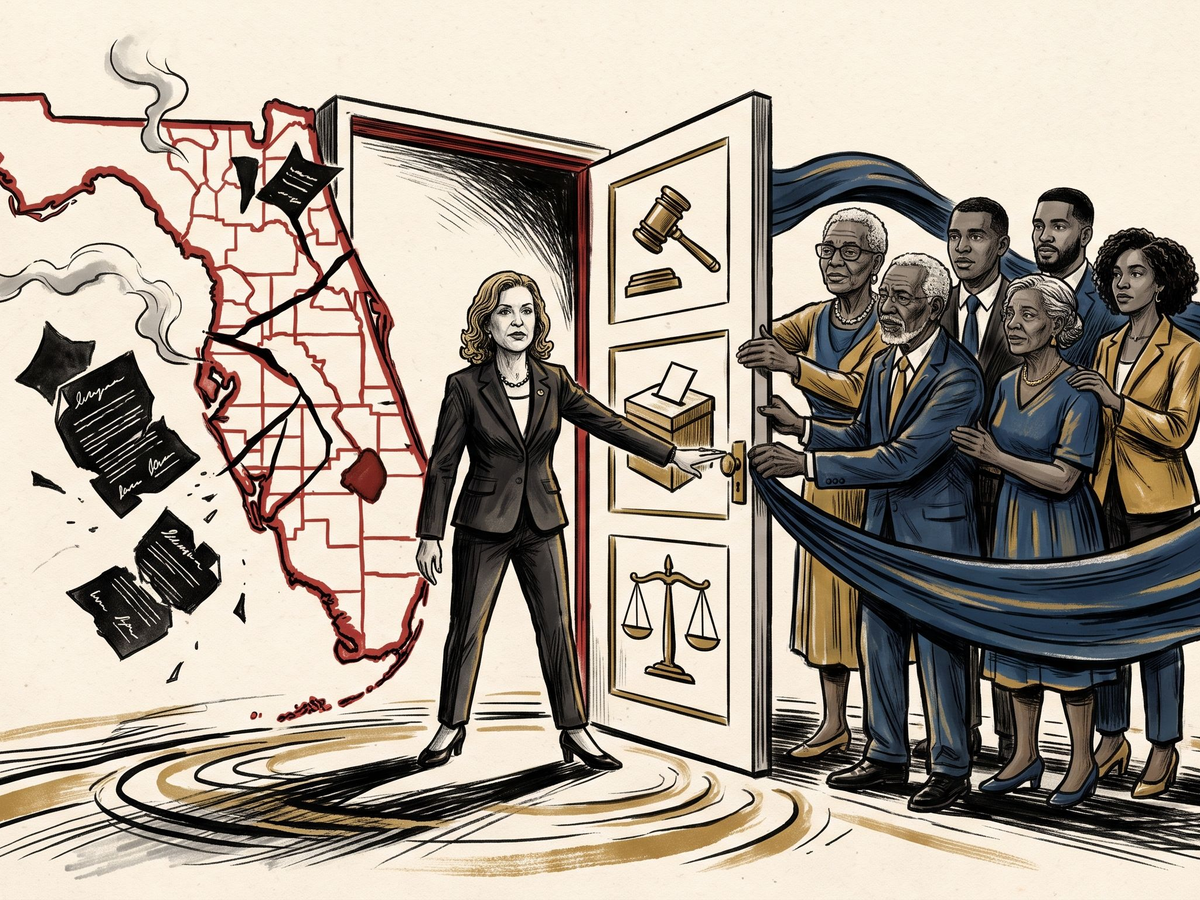
|  | Art: Burn the Playbook - FL-20 door, 2026. |
| | | The Spark - FL-20 | DWS Found the Door the GOP Cut Open | They weakened a Black seat, and she treated it like available real estate. | By Michael Starr Hopkins, Editor | They weakened a Black seat, and Debbie Wasserman Schultz treated it like available real estate. That is the whole FL-20 fight without the nice napkin folded over it. | The public version is cleaner, of course. Redistricting happened. Lines moved. Districts changed. A senior member of Congress had to make a choice. Wasserman Schultz looked at the new map and decided to run in Florida's 20th Congressional District. | Fine. People can run where the law lets them run. But voters can also say: absolutely not. | Because this is not some random open lane on the highway. FL-20 has been a Black-opportunity seat in South Florida politics. It is the seat Alcee Hastings held for years. It is the seat Sheila Cherfilus-McCormick won after him. It sits in Broward and Palm Beach communities where Black voters did not just show up for the Democratic Party. They built the damn floor the party stands on. | So when Republicans redraw the map, weaken Black voting power, and scramble the old boundaries, the question is not just "where can DWS legally run?" | The question is: why is a Democratic leader treating Republican damage like her personal exit ramp? |
| |
|
| | | Polling Desk | Source: WLRN. The local terrain is the whole story: six Black candidates were already in the Democratic field, Black voters made up more than 50% of the Democratic primary electorate, and FL-20 became the first vacant Black-opportunity district primary in the post-Callais era. | That is why this is not just a personality fight. The polling-and-electorate signal says Black voters are not a side audience here. They are the power center. When a senior white incumbent walks into that seat after the map weakens Black voting strength, the question is not whether she found a legal opening. The question is who gets to benefit after the opening was made. |
| |
|
| | | Why This Is Happening Now | This fight got hot because the map changed and DWS made a choice. | Local Black Democratic leaders did not whisper about it. They said it out loud. WLRN reported in May that Broward's Democratic Black Caucus urged Wasserman Schultz not to run in FL-20 and warned that letting a white incumbent slide into a Black-opportunity district after redistricting could set a bad example across the South. | That warning matters because it does not sound like cable-news drama. It sounds like people who know how this works. | First, the map changes. Then the party says everybody has to be practical. Then a senior politician says she is only following the rules in front of her. Then Black voters are told to be patient, strategic, and realistic while the filing deadline and the August 18 primary keep getting closer. Then the seat is gone. | That is the part people in Washington dress up with words like "incumbency" and "coalition" and "member protection." Normal people call it what it is: somebody bigger walking into the room and acting like the chair was already theirs. |
| |
|
| | | The Money | Here is the number to keep in your pocket: $2.51 million. That is how much cash on hand the FEC showed for Wasserman Schultz in the 2026 FL-20 race through March 31. | Now put it next to the rest of the field. Manley: about $22,868 cash on hand. Holness: about $312,672. Campbell: about $26,060. Cherfilus-McCormick: about $11,081. | Money does not vote. People vote. But money buys mail, consultants, field staff, digital ads, polling, lawyers, and the lovely little political fog that makes a power move sound like a public service. | So when people say, "Let the voters decide," fine. Let them. But do not pretend the voters are walking into a quiet room. DWS had almost 110 times Manley's cash on hand, about eight times Holness's, about 96 times Campbell's, and more than 225 times Cherfilus-McCormick's. | That is why the $2.51 million matters. It is not just a fundraising stat. It is the cushion that lets DWS wait out the outrage and hope regular people get tired. |
| |
|
| Your next 100 customers are already in Apollo | | Find, reach, and close your perfect deals — without juggling five tools or hiring more reps. | Apollo gives you everything you need to build real pipeline, fast. From inbound to outbound, first touch to close. | All in Apollo. | Sign up for free | | | The BTP Read | The Democratic Party loves Black voters in November and gets weird around Black power in June. That is the honest sentence. | Black voters are trusted to save democracy, save the Senate, save the White House, save local judges, save school boards, and save whatever emergency the party has decided is the most important emergency in human history this week. | But when a real seat, real seniority, real federal power, and real local representation are on the table, suddenly everybody discovers process. Suddenly it is complicated. Suddenly people want to talk about maps. Suddenly they want to talk about electability. Suddenly the same party that sends fundraising emails about voter suppression wants Black voters to shrug when a redistricting wound becomes somebody else's opportunity. | No. | If Republicans cut open the district, Democrats do not get to loot the wound and call it unity. |
| |
|
| | | The Local Proof | Source: WLRN. Broward's Democratic Black Caucus told Wasserman Schultz not to run in FL-20. The concern was bigger than one politician. Leaders warned that the move could normalize white incumbents stepping into Black-opportunity districts after Republican redistricting. | That is the deep-cut proof point here. Not a vibe. Not a social-media fight. A local Black Democratic organization looked at the new map, looked at the vacant seat, looked at the filed Black candidates, and said this choice could become a national precedent. | Source: CBS Miami. Local Black leaders and candidates pushed back in public. State Sen. Shevrin Jones said it was not right. State Rep. Ashley Gantt said the seat should remain represented by a Black person. Elijah Manley, Dale Holness, Rudolph Moise, Luther Campbell, and Sheila Cherfilus-McCormick all criticized the move in that coverage. | Florida Politics has followed the field as well. The Democratic primary now includes Wasserman Schultz, Manley, Holness, Moise, Campbell, Cherfilus-McCormick, and others. That matters because the field is not empty. Nobody can honestly say the district had no Black candidates, no local candidates, no other voices, no one ready to make the case. | This is not a vacuum. It is a choice. |
| |
|
| | | The Door | The door did not open by accident. Florida's redistricting fight weakened Black voting power and turned a district with a long Black political memory into a tempting piece of member-protection math. That is how institutional harm usually works. First the map changes. Then everyone with power explains why the new map is simply reality. | The point is not that Wasserman Schultz is personally responsible for every line on the map. The point is that she knows what the line did. When you see a door opened by gerrymandering and walk through it anyway, you do not get to act surprised when the people on the other side call it what it is. |
| |
|
| | | What It Costs | The cost is not abstract. | Representation is not just a photo on a mailer. It shapes who gets called back, who gets heard early, who gets warned when a federal rule is about to hit a neighborhood, who knows which church basement matters, and who understands that "community outreach" is not the same thing as trust. | When Black voters lose power on paper, the damage shows up later in regular life. It shows up when a hospital closes and nobody in the room understands the bus route. It shows up when insurance rates crush a neighborhood and the hearing is scheduled like working people do not exist. It shows up when immigration, housing, policing, schools, and disaster money get discussed by people who know the district as a spreadsheet. | South Florida does not need another politician discovering Black voters through a consultant memo. It needs representation that understands the district before the cameras turn on. | That does not mean every Black voter has to vote for the same Black candidate. Black voters are not a prop. They get to argue, split, judge, punish, forgive, and choose like everyone else. But the first choice belongs to them. |
| |
|
| | | What Power Is Testing | Power is testing exhaustion. That is what this is. | It is betting people are too tired to keep track of one more redistricting story. Too tired to read the FEC numbers. Too tired to remember the op-ed. Too tired to care about an August 18 primary. Too tired to notice that the same people who ask Black voters to save democracy are now asking them to surrender a seat quietly because it would be impolite to fight. | That bet can lose. | It loses when voters keep the story simple: they cut the map, she took the opening, and Black voters can close the door. | The technical story is the cover story. The real story is whether a Black-opportunity district gets treated like a life raft for a senior politician. |
| |
|
| | | Bottom Line | The party does not get to call Black voters essential and then treat Black seats as flexible. That is the verdict. | DWS can run. Black voters can say no. Local leaders can say no. Challengers can say no. People who understand what this district means can say no without apologizing for being difficult. | Because the real insult is not that she filed. The insult is the assumption that everybody would get over it. | Maybe they will not. Maybe the door stays closed. |
| |
|
| | | Your Move | If you are in FL-20, check your registration and primary rules now. Do not wait until the last week, when every campaign starts yelling and every mistake becomes harder to fix. Forward this to one person who thinks redistricting is too boring to matter. Tell them this is what it looks like after the map gets drawn: somebody still has to decide who benefits from the damage.
| |
| |
|
| What is the biggest issue in the FL-20 fight? | | | Sources Say News Sources Say is where the tea gets spilled in Washington. Founded by Capitol Hill reporter Juliegrace Brufke, the platform delivers insider reporting, a newsletter and a podcast to deliver sharp, no... | | Subscribe |
| | | | Burn Notice | DWS can run. Black voters can say no. The party does not get to call Black voters essential and then treat Black seats as flexible. |
| |
|
|
|
|
|