| | BURN THE PLAYBOOK | Independent · Editor-Owned · No Paraphrase |
| |
|
|
Wednesday Edition · July 22, 2026 |
POWER TO POCKET |
The Supreme Court Kept Birthright Citizenship. Trump Is Still Asking For A Do-Over. |
Five justices said the Constitution protects citizenship at birth. A sixth said federal law defeats Trump's order. The president now says he wants the Court to rehear the case. |
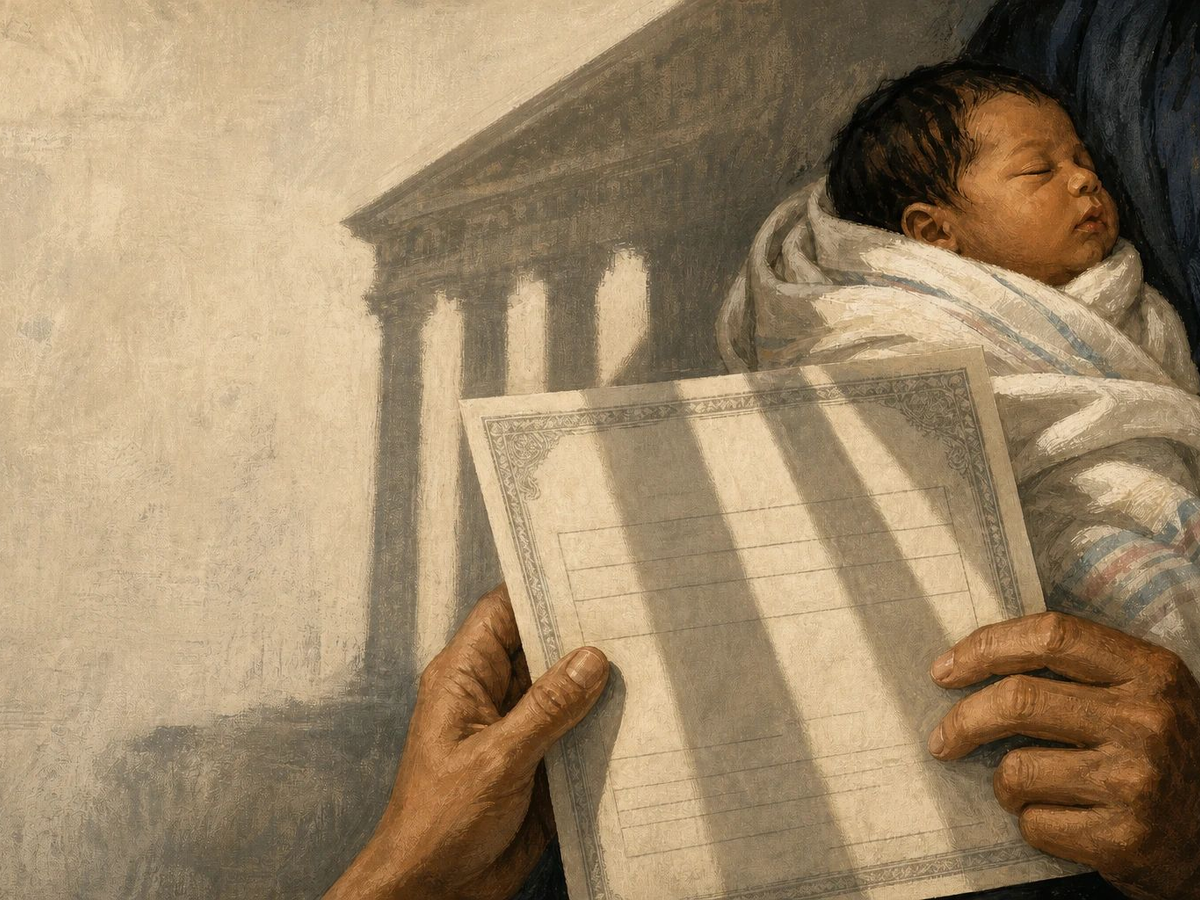
 | Painterly editorial illustration by Burn the Playbook. AI-generated editorial image; not a photograph of a documented scene. |
|
WHAT THIS MEANS FOR YOU | The fight reaches birth certificates, passports, Social Security records, school enrollment and whether the government recognizes a child as American from day one. |
|
|
The Supreme Court told Donald Trump that a president cannot rewrite a baby's citizenship with an executive order. |
Trump's answer is that he wants a do-over. |
Fact: On June 30, the Court ruled 6-3 against the order Trump signed on the first day of his second term. The order directed federal agencies not to issue or accept documents recognizing citizenship for certain U.S.-born children whose mothers were undocumented or here temporarily and whose fathers were not citizens or lawful permanent residents. Source: Supreme Court; Executive Order 14160. |
That was not a debate-club exercise. It was an instruction about birth certificates, passports, Social Security records and whether the government would recognize a child as American from the first day of life. |
The Six Votes Were Not All The Same |
Five justices - Chief Justice John Roberts and Justices Sonia Sotomayor, Elena Kagan, Amy Coney Barrett and Ketanji Brown Jackson - said the Fourteenth Amendment protects the citizenship of children born here and subject to American law, including children whose parents are unlawfully or temporarily present. |
Justice Brett Kavanaugh supplied the sixth vote against Trump's order on a narrower ground. He wrote that federal law, 8 U.S.C. §1401(a), already grants citizenship to people born in the United States and that Congress had not created Trump's proposed exceptions. |
That distinction matters. The constitutional majority was five. The result against the executive order was six. |
The Court's opinion ended with a sentence that should not need a marketing team: "We keep that promise today." |
The promise came from the Fourteenth Amendment, ratified after the Civil War because this country had already learned what happens when citizenship is left to the comfort of the people in power. Dred Scott had declared that Black people could not be citizens. The amendment put citizenship into the Constitution so a president, Congress or state could not make it a favor. |
 | Proof/consequence illustration by Burn the Playbook. AI-generated editorial image; not a photograph of a documented scene. |
|
Fact: Executive Order 14160 did not merely express a legal theory. It told agencies how to treat documents. That is why the case mattered beyond lawyers. When the government refuses to accept a child's citizenship papers, the argument leaves the page and enters the hospital, the passport office, the benefits counter and the school enrollment desk. |
A Child Is Not An Immigration Penalty |
Trump has argued that broad birthright citizenship encourages illegal immigration and birth tourism. Those are immigration-policy arguments. They do not answer the legal question the Court decided. |
A child does not choose a parent's visa, border crossing or paperwork. The executive order tried to make the child's citizenship turn on those choices anyway. |
The Associated Press account of the ruling shows how deep the disagreement remains. The dissenters argued that citizenship requires more than birth and subjection to American law. The majority said the country settled that question through the text and history of the Fourteenth Amendment. |
Fact: Trump said July 8 that he would ask the Court to rehear the case, according to Bloomberg Law. Saying he will file is not the same as proving a rehearing petition has been filed or granted. The current judgment remains the current judgment. |
The Larger Power Grab |
The most dangerous part of the order was not only whom it targeted. It was the method. |
The president claimed the power to take constitutional and statutory citizenship language, add exceptions Congress had not enacted and order the rest of the government to behave as though those exceptions were law. |
Analysis: If a president can do that to citizenship, the paper in everybody's pocket becomes less secure. A right becomes an administrative setting. A constitutional guarantee becomes whatever the next order says it means. |
That is why the rehearing demand matters even if it goes nowhere. It keeps testing whether a settled constitutional command can be turned into a temporary policy choice through persistence alone. Families should not have to wait for the president's next filing to know whether their newborn belongs to the country where the child was born. |
The Court's answer should have ended the practical question. Born here and subject to U.S. law means citizen at birth. The executive branch does not get to add a parentage test because the president dislikes the result. |
You can have an immigration debate. You can argue about visas, enforcement, asylum and the border. What you cannot honestly call conservative is giving one president a red pen over the Fourteenth Amendment. |
Citizenship is a right at birth, not a permission slip from the president. |
Work to do |
Read the Supreme Court decision before taking anyone's spin. Ask your senators what they will do if the administration defies the citizenship rule. Save the Federal Register order and the Court opinion together; the fight is the gap between those two records.
|
Your move |
Read the Supreme Court's decision. |
Watch · BTP |
|
Sources |
|
| | Burn the Playbook | News that shows who has the power, who pays and what you can do. |
| |
|
|
Manage preferences · Unsubscribe |