The SAVE Clock Started July 1. The First Deadlines Are Arriving Now.
Each deadline is printed on a servicer notice, sent in waves since July 1. Here is how to find yours.
The full report is below — also published on Beehiiv — with its receipt trail and source ladder. Every claim below clears at two-of-three independent sources before publication, with right-of-reply offered to every named subject.
The SAVE Clock Started July 1. The First Deadlines Are Arriving Now.
Each deadline is printed on a servicer notice, sent in waves since July 1. Here is how to find yours.

Burn the Playbook
September 29, 2026

 | |||
★ Independent · Editor-Owned · No Paraphrase ★ Burn the Playbook "The newsletter DC reads and hopes you don't." | |||
|
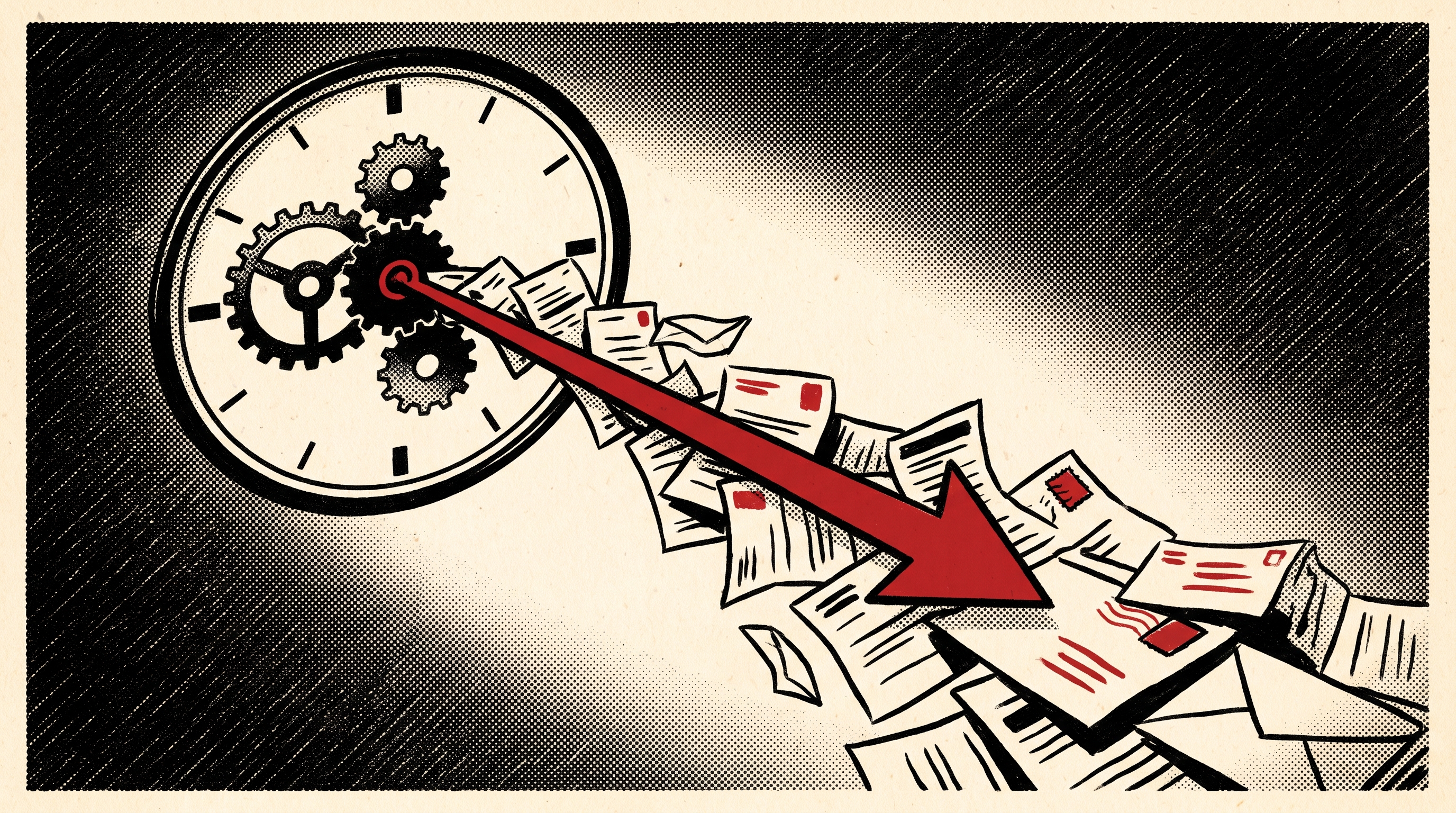
In March, the Education Department said the 7.5 million borrowers enrolled in SAVE would each get at least 90 days to choose a new repayment plan, with notices starting July 1. The first of those deadlines are arriving about now. Miss yours and you keep the loan but lose the say: the Department will place you in the Standard Repayment Plan or the new Tiered Standard Plan.
Nobody can tell you yet how many SAVE borrowers will fall behind. I can tell you what the last wave looked like. After the pandemic pause, about 1 million federal student loan borrowers defaulted in the last three months of 2025 and another 2.6 million in the first three months of 2026, the New York Fed estimated in May. Those 3.6 million are not a count of SAVE borrowers, but they are the warning label on this deadline.
Seven and a half million borrowers. No single date.
Seven and a half million people is about one in six federal student loan borrowers. Each of them is on a separate clock, and nobody in Washington will read the date off the letter for them.
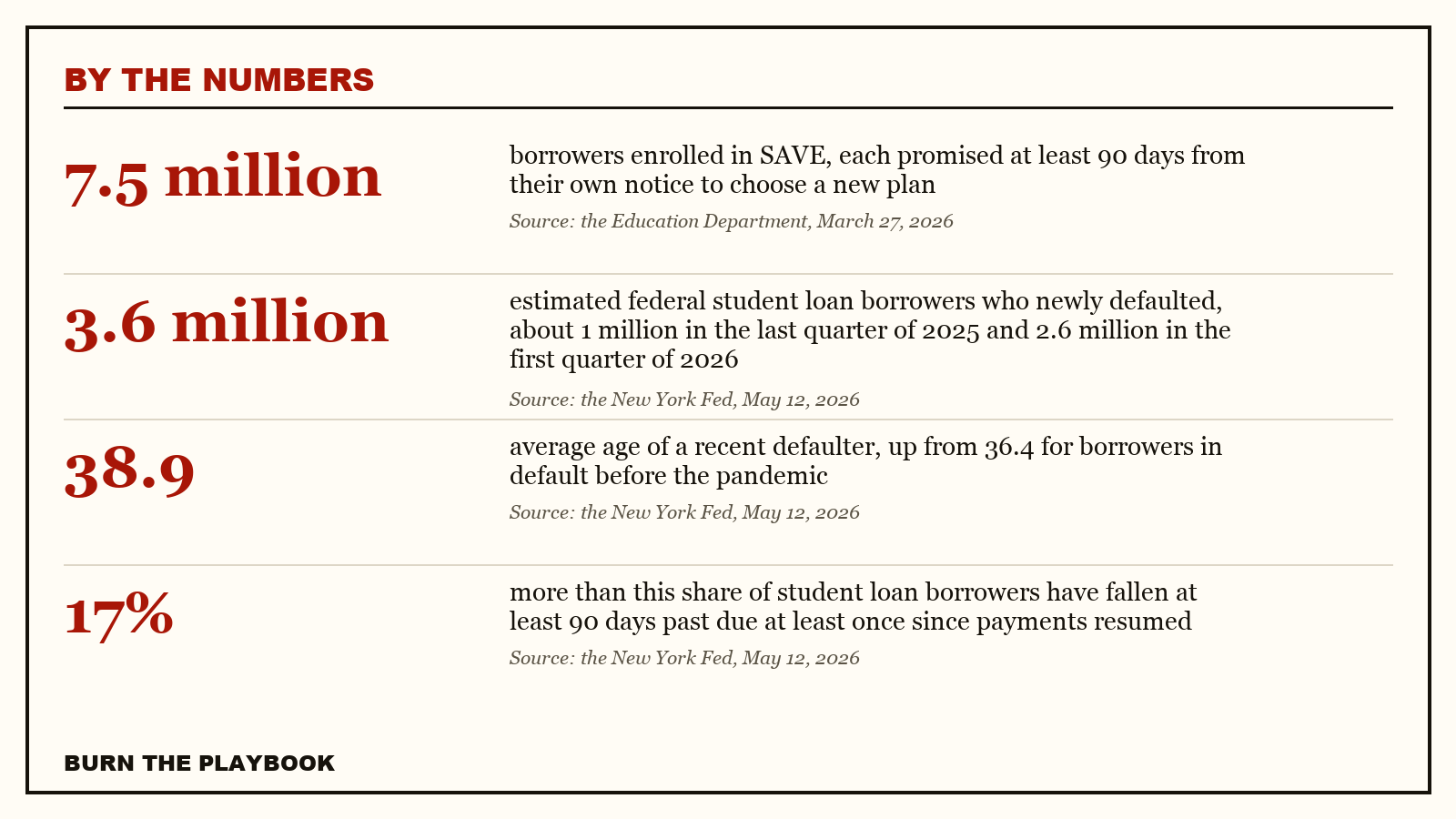
By the Numbers
7.5 million: borrowers enrolled in SAVE, each promised at least 90 days from their own notice to choose a new plan, per the Education Department, March 27, 2026
3.6 million: estimated federal student loan borrowers who newly defaulted, about 1 million in the last quarter of 2025 and 2.6 million in the first quarter of 2026, per the New York Fed, May 12, 2026
38.9: average age of a recent defaulter, up from 36.4 for borrowers in default before the pandemic, per the New York Fed, May 12, 2026
17%: more than this share of student loan borrowers have fallen at least 90 days past due at least once since payments resumed, per the New York Fed, May 12, 2026
$1.86 trillion: all student loans outstanding in the second quarter of 2026, per the Federal Reserve's G.19 release, September 8, 2026
$40,467: average federal student loan balance, $1.72 trillion across 42.6 million federal borrowers as of March 31, 2026, per Federal Student Aid
Sponsored. BTP earns a commission if you sign up.
Heavy news cycle. BetterHelp matches you with a licensed therapist by chat, phone, or video, and new users get 20% off the first month. Get matched.
Most new defaulters were not behind before the pause.
The New York Fed's economists looked at who defaulted. The average new defaulter is 38.9 years old, up from 36.4 for borrowers in default before the pandemic. Before the pause, nearly 30 percent were current on their loans and making payments, and nearly half had not yet taken out loans or had no payment due yet. About three in four were not behind.
Most new defaulters are not people who ignored a bill for a decade. Southern states had the largest share of new defaulters, with at least 10 percent of borrowers newly defaulting in Louisiana, Mississippi, Alabama, Georgia and South Carolina over those two quarters. The New York Fed put the stakes in one sentence: "The primary consequence of default is garnishment of wages, Social Security, and tax returns." The Education Department delayed wage garnishment and the Treasury Offset Program on January 16 with no firm end date, and a delay is not a pardon.
One borrower's new bill.
The Nation followed one SAVE borrower, a 70-year-old psychiatric nurse practitioner who has not defaulted. She borrowed $186,000, and the balance has grown to $435,000. Under SAVE she paid $800 a month, and her cheapest option among the new plans, Income-Contingent Repayment, is $3,900, almost five times as much. Her words to The Nation: "no way on God's green Earth I can afford that payment."
She is not one of the 3.6 million. She has a degree and a job, and the plan that made her bill payable is gone.
The case against SAVE is real.
Missouri and other Republican-led states sued in 2024, arguing the Education Department wrote a repayment plan Congress never authorized, and the Eighth Circuit blocked SAVE that year. In December 2025, the Department and Missouri filed a joint settlement asking the court for a final judgment. After the district court dismissed the case as moot, the Eighth Circuit reversed on March 9, 2026, and the next day the district court entered judgment vacating the SAVE rule.
Take that case at full strength. A court vacated the rule, and the Department that runs the loans now calls SAVE unlawful in its own announcement. The cost argument is simple: every dollar SAVE did not collect lands on taxpayers, including plenty who never went to college.
Grant all of it. A lawful ending still owes people a working exit, and this exit runs through millions of separate deadlines printed on servicer notices that go out in waves. That is a lot of weight to hang on a letter.
What to do this week if you're on SAVE.
Find the notice from your servicer and read the deadline printed on it. The date is yours, not your neighbor's, because the Education Department set each borrower's deadline at least 90 days from their own notice. Log in to your servicer account and choose a plan before that date, or the Department will place you in a standard plan. If your notice has not come yet, notices are going out in waves through the fall, NerdWallet reported, so watch for it.
Then check the notice against your account. In August, MOHELA sent false past-due and near-default warnings to some SAVE borrowers, and the Education Department acknowledged an issue affecting "a small number of borrowers" at one servicer and said it was fixed, Newsweek reported. If a notice says you are behind and your account says you are not, call your servicer that day.
Forward this to one person on SAVE before their notice gets buried.
Paid recommendation. BTP may earn when you subscribe.
Five Minute Daily promises everything you need to know for the day in five minutes. BTP goes deep on one story each weekday morning. It promises the quick sweep of the rest. Try Five Minute Daily free.
Sources
U.S. Department of Education, press release on next steps for borrowers enrolled in SAVE, March 27, 2026.
Federal Reserve Bank of New York, Liberty Street Economics, federal student loan defaults after the pandemic pause (Jacob, Lee, Mangrum, Scally and van der Klaauw), May 12, 2026.
Federal Reserve, G.19 Consumer Credit, released September 8, 2026.
Federal Student Aid, Federal Student Loan Portfolio, data as of March 31, 2026.
Civil Rights Litigation Clearinghouse, Missouri v. Biden, No. 4:24-cv-00520, docket summary, accessed September 2026.
U.S. Department of Education, press release on its agreement with Missouri to end SAVE, December 9, 2025.
U.S. Department of Education, press release delaying involuntary collections, January 16, 2026.
NerdWallet, on the SAVE lawsuits and switch notices, July 2, 2026.
Kristin Collier, The Nation, on SAVE borrowers and the new repayment plans, August 14, 2026.
Newsweek, on the servicer notice error, September 1, 2026.
Burn Notice: The court already decided SAVE. The only decision left is yours, and it comes with a date.
Michael
This one is built to forward.
Drop your email and the next receipt lands where you can actually use it.
Already on the list? Send this to one person who reads the fine print.
New here? Subscribe from this issue so the dashboard can count the public funnel, not just imports.